
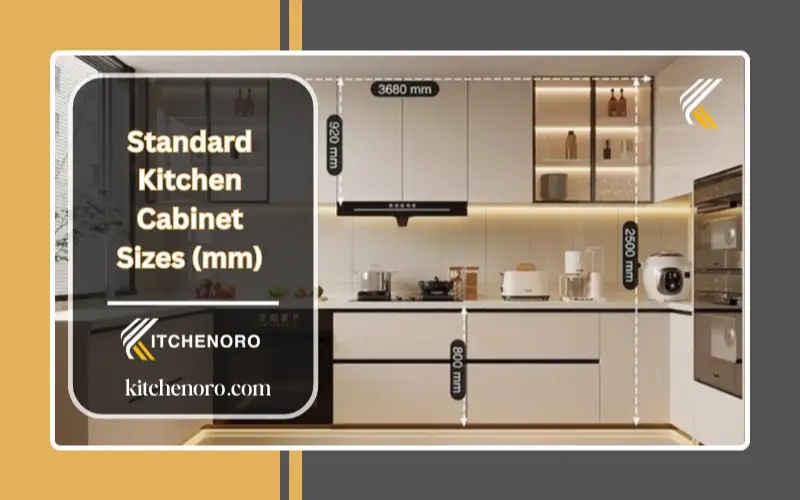
Choosing the correct kitchen cabinet sizes is one of the most critical steps in designing a kitchen that is functional, comfortable, and visually balanced. While cabinet styles, finishes, and materials evolve over time, cabinet dimensions remain rooted in proven industry standards that support ergonomics, appliance compatibility, and efficient workflow.
This guide focuses on standard kitchen cabinet sizes in millimeters (mm) commonly used by manufacturers for stock and semi-custom cabinetry. Understanding these measurements helps homeowners, designers, and contractors avoid costly mistakes, improve installation accuracy, and create kitchens that feel spacious, intuitive, and long-lasting.
Whether you are remodeling an existing kitchen, building a new home, or replacing cabinets, this complete guide covers base, wall, tall, pantry, and oven cabinet dimensions, along with material insights, ergonomic guidelines, professional tips, FAQs, and installation best practices.
Who This Guide Is For
This guide is designed for:
-
Homeowners planning a kitchen remodel
-
Interior designers and architects
-
Cabinet installers and contractors
-
DIY renovators working with metric measurements
-
Anyone ordering stock or semi-custom kitchen cabinets
Why Standard Kitchen Cabinet Sizes Matter
Standard kitchen cabinet sizes are not arbitrary. They are developed around human ergonomics, appliance dimensions, and construction efficiency. Using standardized measurements ensures:
-
Comfortable countertop working height
-
Proper clearance for appliances, doors, and drawers
-
Smooth kitchen workflow and safe movement
-
Faster installation with fewer adjustments
-
Easier replacement, upgrades, or repairs in the future
Ignoring standard dimensions often results in poor usability, higher costs, and long-term discomfort.
Standard Kitchen Cabinet Sizes (mm) – Quick Answer
Standard kitchen cabinet dimensions in millimeters include:
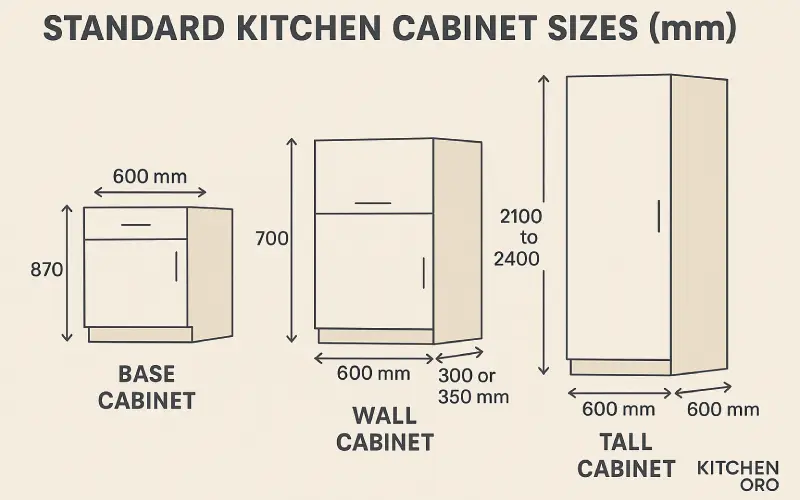
Base cabinets: 720mm high × 560mm deep
Wall cabinets: 300mm–1070mm high × 300mm deep
Tall cabinets: 2134mm–2438mm high × 610mm deep
Cabinet widths: 150mm–1200mm
These sizes are widely adopted by cabinet manufacturers and suit most kitchen layouts.
Kitchen Cabinet Types & Their Purpose
Kitchen cabinets fall into three main categories:
-
Base cabinets – Floor-mounted units supporting countertops and appliances
-
Wall cabinets – Mounted above countertops for accessible storage
-
Tall cabinets – Full-height units for pantries, ovens, and utilities
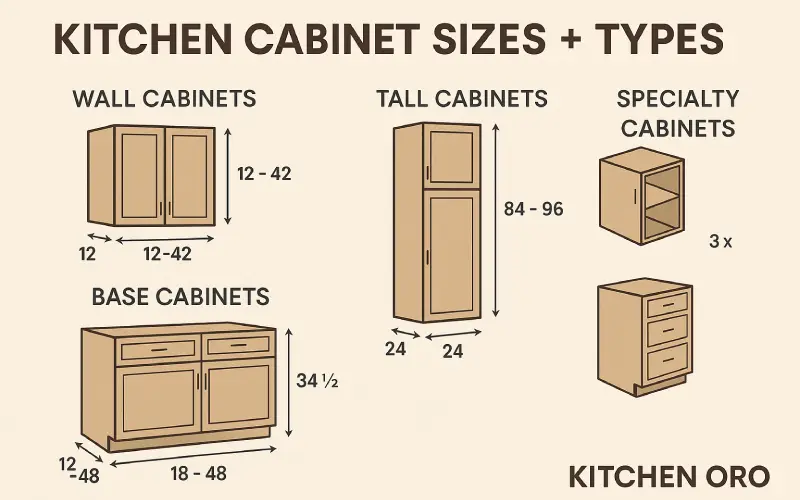
Each cabinet type follows specific dimensional standards to ensure comfort, balance, and safety.
Standard Kitchen Cabinet Dimensions Overview (mm)
| Cabinet Type | Height (mm) | Width (mm) | Depth (mm) |
|---|---|---|---|
| Base Cabinets | 720 | 150–1200 | 560 |
| Wall Cabinets | 300–1070 | 150–1200 | 300 |
| Tall Cabinets | 2134–2438 | 450–1067 | 610 |
Conversion Note: Inch equivalents are approximate. Always design in millimeters for precision.
Ergonomic Guidelines for Kitchen Cabinet Design
Professional kitchen layouts follow ergonomic standards to reduce strain and improve efficiency:
-
Recommended countertop height (with worktop): 890–910mm
-
Space between countertop and wall cabinets: 450–500mm
-
Maximum comfortable reach height: 2100mm
-
Toe kick height: 100–150mm
-
Toe kick depth: 50–75mm
Expert Insight
“Most installation problems happen not because of cabinet size—but because installers forget to include flooring height, worktop thickness, or appliance ventilation gaps.”
— Daniel Moore, Certified Kitchen Designer
Kitchen Cabinet Materials
Choosing the right cabinet material affects durability, appearance, and budget.
1. Solid Wood
Natural lumber offers premium aesthetics and long lifespan but comes at a higher cost and is sensitive to humidity changes.
2. Plywood
Strong, stable, and moisture-resistant, plywood is one of the most popular materials for modern kitchens.
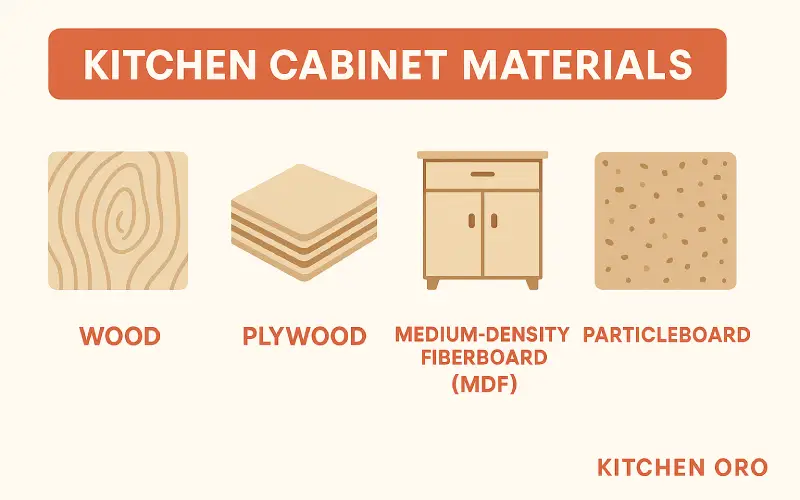
3. MDF (Medium-Density Fiberboard)
Ideal for painted finishes, MDF provides a smooth surface at a more affordable price.
4. Particle Board
A cost-effective option often laminated for moisture resistance, suitable for budget-conscious projects.
| Material | Key Benefits |
|---|---|
| Solid Wood | Natural beauty, long lifespan |
| Plywood | Strong, stable, moisture-resistant |
| MDF | Smooth finish, affordable |
| Particle Board | Lightweight, cost-effective |
Kitchen Base Cabinet Dimensions
Base cabinets form the structural foundation of every kitchen.
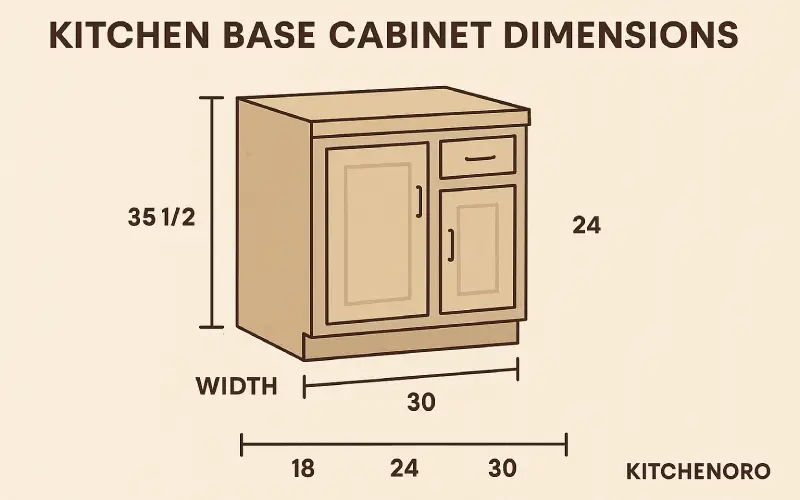
Base Cabinet Height
| Type | Height (mm) | Notes |
|---|---|---|
| Standard | 720 | Industry standard |
| Low (Accessible) | 650 | Wheelchair-friendly |
| High (Custom) | 970 | For taller users |
| Underlay | +12 | Optional plywood base |
Installer Tip: Always measure base cabinets after flooring installation.
Base Cabinet Depth
| Type | Depth (mm) | Use |
|---|---|---|
| Standard | 560 | Most kitchens |
| Reduced | 450 | Compact layouts |
| Island | 1120 | Back-to-back units |
Base Cabinet Widths
| Width (mm) | Application |
|---|---|
| 150–300 | Pull-outs, fillers |
| 450–900 | Drawers, storage |
| 1000–1200 | Sinks, appliances |
Toe Kick (Plinth) Dimensions
Toe kicks provide foot clearance and comfort.
| Feature | Size (mm) |
|---|---|
| Height | 100–150 |
| Depth | 50–75 |
| Material | MDF, plywood, metal |
| Finish | Matching or contrasting |
Adjustable plinths allow fine height adjustments after flooring installation.
Kitchen Wall Cabinet Dimensions
Wall cabinets influence both storage capacity and visual balance.
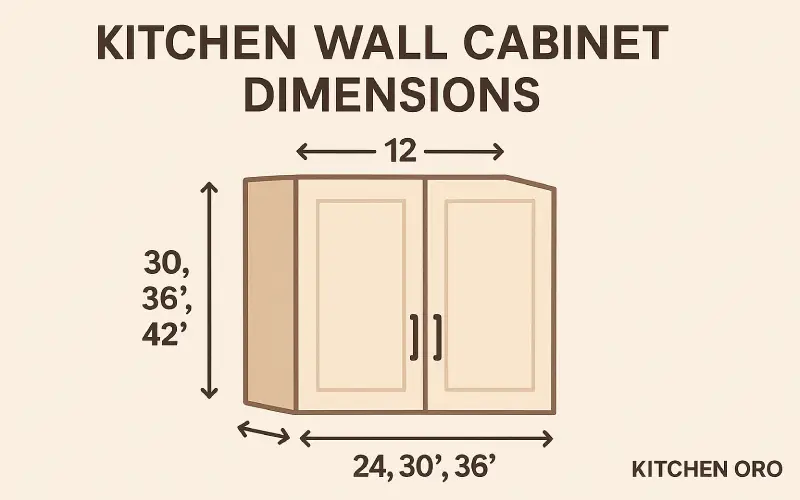
Wall Cabinet Heights
| Height (mm) | Typical Use |
|---|---|
| 300 | Above refrigerators |
| 380–460 | Over appliances |
| 610 | Mid-wall storage |
| 760 | Standard |
| 910 | 8-foot ceilings |
| 1070 | 9-foot ceilings |
Wall Cabinet Depths
| Depth (mm) | Use |
|---|---|
| 300 | Standard |
| 610 | Over refrigerators |
Wall Cabinet Widths
| Width (mm) | Application |
|---|---|
| 150 | Narrow storage |
| 600 | Standard |
| 900 | Double-door |
| 1200 | Large storage |
Kitchen Tall Cabinet Dimensions
Tall cabinets maximize vertical storage and create a seamless wall look.
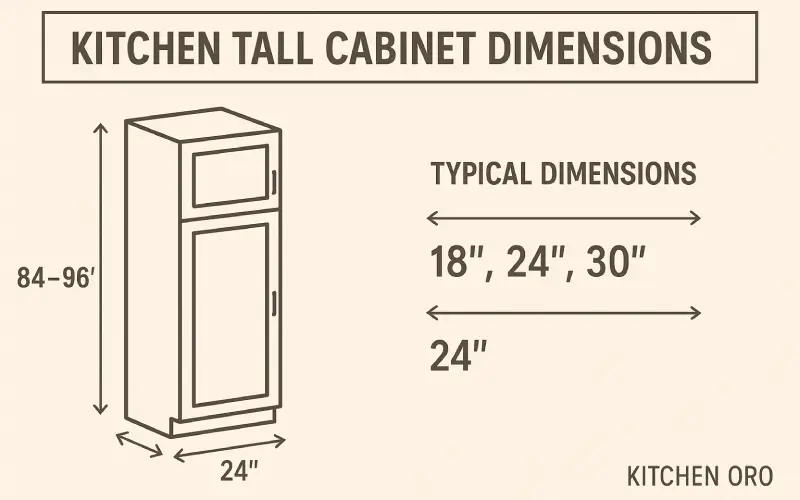
Height Options
| Type | Height (mm) |
|---|---|
| Short Tall | 2134 |
| Medium Tall | 2286 |
| Full Height | 2438 |
Width Options
| Width (mm) | Use |
|---|---|
| 457 | Narrow pantry |
| 610 | Standard pantry |
| 914 | Oven or utility |
| 762–1067 | Extended layouts |
Depth Options
| Depth (mm) | Purpose |
|---|---|
| 305 | Dry goods |
| 457 | Utility storage |
| 610 | Appliances |
Pantry Cabinet Dimensions
Pantry cabinets provide floor-to-ceiling organization.
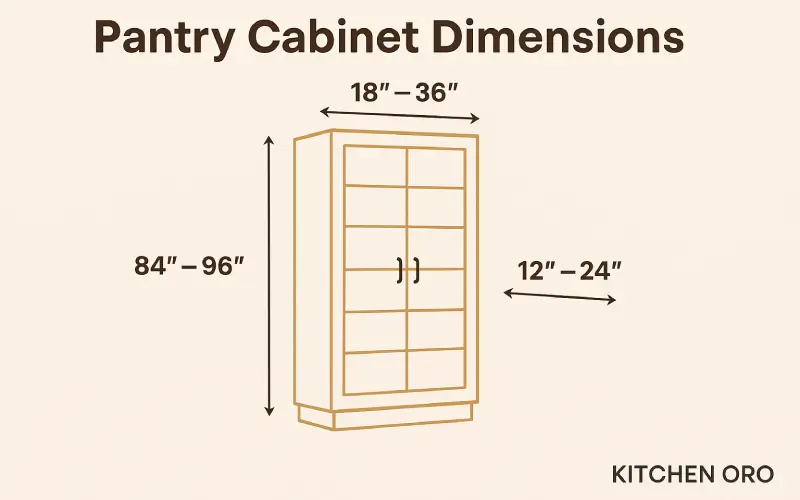
| Feature | Size (mm) |
|---|---|
| Height | 2134–2438 |
| Depth | 610 |
| Width | 305–914 |
Pull-out shelves and internal drawers improve accessibility.
Appliance Compatibility & Ventilation
Always account for appliance clearance and airflow:
-
Refrigerators require rear and top ventilation
-
Ovens need heat dissipation gaps
-
Dishwashers need side clearances
-
Microwaves require overhead ventilation
Never assume appliance size equals cabinet opening—always verify manufacturer specifications.
Oven Cabinet Dimensions
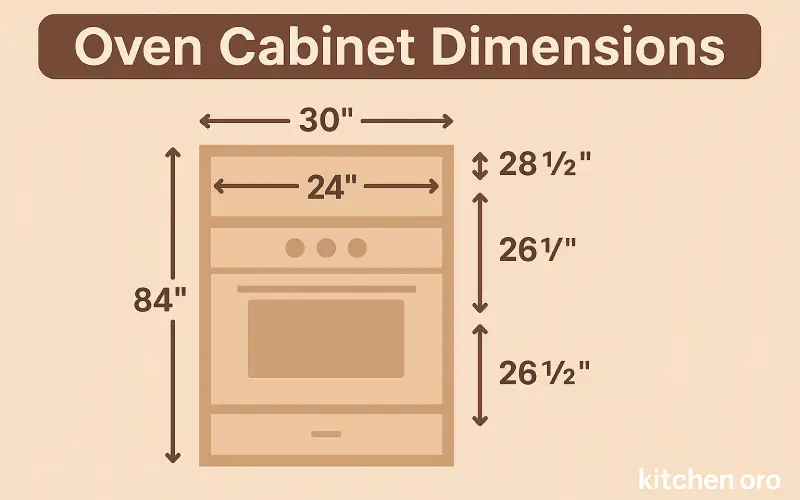
| Feature | Size (mm) |
|---|
| Width | 610–762 |
| Height | 686–737 |
| Depth | 559–610 |
Measurement Notes & Installation Tolerances
-
Allow 3–6mm clearance during installation
-
Account for door thickness and edge profiles
-
Use filler panels near walls and corners
-
Include countertop thickness in height planning
Kitchen Cabinet Measurement Checklist
Before ordering cabinets, confirm:
- Finished floor level
- Ceiling height at multiple points
- Appliance dimensions
- Plumbing and electrical locations
- Door swing clearance
- Wall straightness
- Required filler panels
- Worktop thickness
Filler Panels & Spacing
| Type | Size (mm) |
|---|---|
| Wall fillers | 15–50 |
| Corner fillers | 50–100 |
| Appliance fillers | Manufacturer-specific |
| End panels | Match cabinet depth |
Common Cabinet Measurement Mistakes to Avoid
-
Mixing millimeters and inches
-
Ignoring appliance ventilation gaps
-
Forgetting flooring height changes
-
Installing wall cabinets too low
-
Skipping filler panels
FAQs
1) What is the size of a standard kitchen cabinet?
Base cabinets are typically 720mm high and 560mm deep.
2) What are the standard kitchen cabinet sizes in mm?
- Base: 720 × 560mm
- Wall: 300–1070 × 300mm
- Tall: 2134–2438 × 610mm
3) Is a 10×10 Kitchen Considered Small?
No. It is considered a standard size for estimates.
4) What is the 3×4 kitchen rule?
It recommends 3 feet between counters and 4 feet between work zones.
Standard vs Custom Cabinet Sizes
| Feature | Standard | Custom |
|---|---|---|
| Cost | Lower | Higher |
| Lead Time | Faster | Longer |
| Flexibility | Limited | Unlimited |
| Installation | Easier | Complex |
| Replacement | Simple | Difficult |
Key Takeaways
-
Standard cabinet sizes are designed for comfort, safety, and efficiency.
-
Base cabinets are typically 720mm high × 560mm deep.
-
Wall cabinets range from 300mm to 1070mm in height.
-
Tall cabinets reach 2134mm–2438mm for maximum storage.
-
Always account for toe kicks, fillers, appliances, and flooring.
-
Designing in millimeters ensures accuracy and reduces errors.
Conclusion
Understanding standard kitchen cabinet sizes in millimeters is essential for designing a kitchen that is functional, efficient, and visually balanced. Correct cabinet dimensions ensure proper workflow, comfort, appliance compatibility, and long-term durability.
Accurate measurements, quality materials, and professional installation together create a kitchen that performs beautifully for years to come.
Disclaimer
All cabinet dimensions provided are standard manufacturer measurements. Actual sizes may vary by brand, door style, material thickness, installation method, and local building standards. Always confirm measurements with your cabinet supplier or installer before ordering.
Sources & Standards
-
Manufacturer specification sheets
-
Kitchenoro professional installation experience
About Kitchenoro
Kitchenoro is your trusted partner for complete kitchen remodeling, renovation, and elegant design. We specialize in premium cabinet installation, countertops, and transforming kitchens into luxurious, functional spaces. With expert craftsmanship and tailored solutions, Kitchenoro turns your vision into reality. Contact us to elevate your kitchen’s style and functionality!