
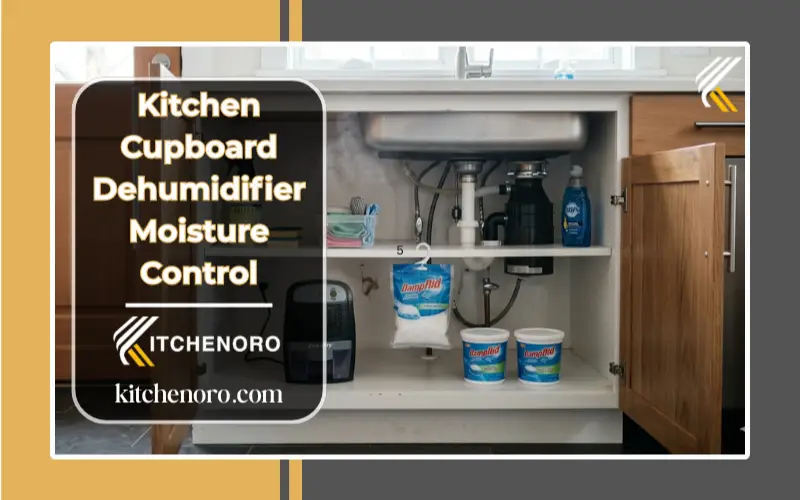
Kitchen cupboards can quietly trap moisture for months before homeowners notice a serious problem. Many people first notice small warning signs, such as musty smells, sticky cabinet doors, damp shelf liners, or slight swelling near the sink. In humid kitchens, daily cooking steam, poor ventilation, hidden pipe leaks, and even wet dishes can slowly create the perfect environment for mold and moisture buildup. Over time, this trapped humidity can damage MDF cabinets, ruin pantry storage, create unpleasant odors, and lead to expensive cabinet repairs if ignored for too long. Good airflow and smart cabinet arrangement both play a major role in preventing moisture problems, especially in kitchens with limited storage space.
I personally dealt with this issue in the cabinet under my kitchen sink during a humid summer. At first, I thought the smell was coming from cleaning products, so I kept wiping the shelves and using air fresheners. But the damp smell returned every few days. After fully emptying the cabinet, I discovered condensation around the plumbing pipes and moisture trapped behind cleaning bottles. Later, I even noticed slight swelling near the cabinet base corners. After testing different moisture-control methods, improving airflow, and using simple dehumidifying solutions, I finally managed to keep the cabinets dry and odor-free. In this guide, I will share practical solutions, real kitchen experiences, and expert-backed tips to help protect your kitchen cupboards from humidity, mold, and long-term moisture damage.
Kitchen Cupboard Dehumidifier- Quick Summary:
A kitchen cupboard dehumidifier helps prevent moisture buildup, mold, damp smells, and cabinet damage caused by humidity, poor ventilation, and hidden leaks. This guide covers practical moisture-control methods, personal experiences, cabinet protection tips, and the best solutions to keep kitchen cupboards dry, clean, and mold-free long-term.
What Is a Kitchen Cupboard Dehumidifier?
A kitchen cupboard dehumidifier is a small device or moisture absorber that removes excess humidity from cabinets. It helps prevent mold, damp smells, swollen wood, and moisture damage inside kitchen cupboards.
Cabinet moisture problems are very common in kitchens with poor airflow and high humidity.
Quick Takeaways
- Kitchen cupboards can trap moisture from steam, leaks, and poor airflow.
- Humidity above 60% can increase mold and cabinet damage.
- Under-sink cabinets usually have the highest moisture levels.
- Silica gel and baking soda help with mild dampness.
- Mini electric dehumidifiers work best for severe humidity problems.
- Regular ventilation and leak checks help prevent long-term cabinet damage.
Why Kitchen Cupboards Get Damp
Kitchen cupboards deal with heat, steam, and trapped air every day. Moisture slowly builds up inside cabinets, especially in small kitchens with poor ventilation.
Here are the most common causes:
-
- Steam from cooking
-
- Water leaks under the sink
-
- Poor air circulation
-
- High indoor humidity
-
- Wet dishes placed inside cabinets
-
- Cabinets near dishwashers
-
- Humid summer weather
-
- Overstocked shelves blocking airflow
Cooking steam is another major cause of cabinet moisture. Steam from boiling water, frying food, kettles, and dishwashers can slowly enter cupboards and create damp conditions over time.
Under-sink cabinets usually have the biggest moisture problems because plumbing pipes create condensation.
Commonly Ignored Sources of Cabinet Moisture
- Steam from rice cookers and kettles
- Dishwasher heat vapor
- Wet cleaning cloths
- Water bottles stored inside cabinets
- Humid grocery packaging
Signs Your Kitchen Cabinets Have Excess Moisture
Many people notice the problem too late. Early signs are often easy to miss.
Watch for these warning signs:
-
- Musty smells
-
- Sticky cabinet doors
-
- Damp shelf liners
-
- Black mold spots
-
- Swollen wood
-
- Peeling laminate
-
- Rust on utensils
-
- Damp food packaging in pantry cabinets
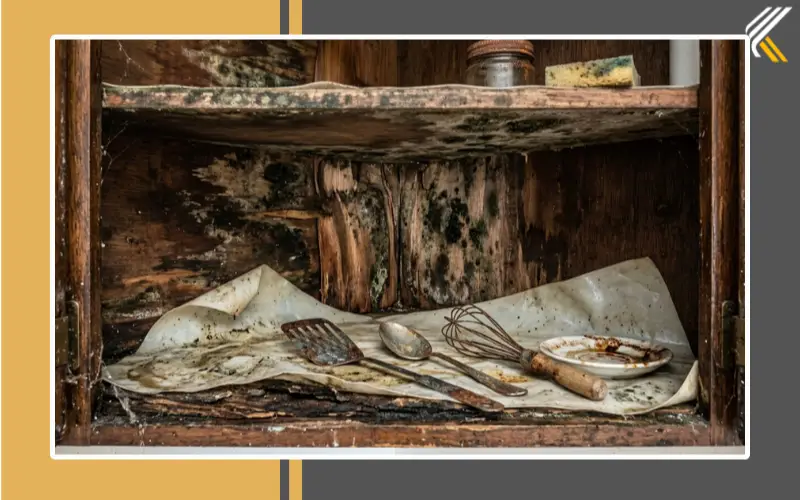
If you notice these signs, you may need a kitchen cupboard dehumidifier or better ventilation.
In my case, the first warning sign was rust appearing on metal baking tools stored near the back of the cabinet. A few weeks later, the shelf liner started feeling damp every morning. Small signs like these usually appear before bigger cabinet damage starts.
| Problem | Possible Cause | Best Solution |
|---|---|---|
| Musty smell | Trapped humidity | Use moisture absorbers |
| Swollen cabinet wood | Excess moisture | Improve ventilation |
| Mold spots | High humidity | Use a dehumidifier |
| Rust on utensils | Damp airflow | Dry cabinets regularly |
| Damp shelf liners | Pipe condensation | Fix leaks and improve airflow |
What Does a Kitchen Cupboard Dehumidifier Do?
A kitchen cupboard dehumidifier removes extra moisture from the air inside cabinets. This helps prevent mold, odors, and wood damage.
There are two main types:
| Type | Best For |
|---|---|
| Electric mini dehumidifier | Heavy moisture problems |
| Moisture absorber packs | Mild dampness |
Small electric units work well in larger pantry spaces. Moisture absorbers are better for small cupboards or under-sink cabinets.
Why You Need a Dehumidifier in the Kitchen
Kitchen humidity rises quickly while cooking. Steam from boiling water and hot food spreads through the room and enters cupboards.
Without moisture control, cabinets can slowly become damaged.
A kitchen dehumidifier helps:
-
- Reduce mold growth
-
- Remove damp smells
-
- Protect wood cabinets
-
- Prevent swelling and warping
-
- Keep pantry food dry
-
- Improve air quality
Mold and mildew can also affect indoor air quality and may trigger allergies in sensitive people. You can also read the CDC’s guide on indoor mold and moisture problems to better understand how humidity affects indoor environments.
It also helps protect expensive cabinet materials like MDF and particle board.
Many homeowners ignore moisture problems until cabinet repair becomes expensive. Replacing swollen MDF or damaged particle board cabinets can cost much more than preventing humidity early.
Best Humidity Level for Kitchen Cabinets
Most experts recommend keeping indoor humidity between 30% and 50%, while kitchen cabinets usually perform best around 40% to 50% humidity.
When humidity rises above 60%, mold can grow faster. Wood cabinets may also absorb moisture and expand. The EPA also recommends controlling indoor humidity levels to help reduce mold growth and moisture-related damage inside homes.
If you live in a humid climate, using a humidity monitor can help you track moisture levels inside your kitchen.
Which Kitchen Cabinet Materials Absorb Moisture Most?
Some cabinet materials handle moisture better than others.
MDF Cabinets
MDF absorbs water quickly. It can swell and lose shape if exposed to moisture for long periods.
Particle Board Cabinets
Particle board is very sensitive to humidity. Wet areas can become soft and weak.
Solid Wood Cabinets
Solid wood is stronger but can still warp if moisture levels stay high.
Plywood Cabinets
Plywood handles humidity better than MDF and particle board. It is more moisture-resistant.
Laminate surfaces may protect cabinets for some time, but trapped moisture underneath can still cause damage.
Choose Better Ventilated Cabinet Designs
Louvered cabinet doors allow better airflow compared to fully sealed cabinets. They can help reduce trapped humidity in humid kitchens.
Best Kitchen Cupboard Dehumidifier Options
Not every moisture solution works for every kitchen. Some homeowners only need simple moisture absorbers, while others need stronger dehumidifiers for severe humidity problems.
Mini Electric Dehumidifiers
These are small powered units that remove moisture from the air. They work best in larger kitchens or pantry cabinets.
Benefits:
-
- Strong moisture control
-
- Reusable
-
- Good for heavy humidity
Downside:
-
- Needs electricity
Mini electric dehumidifiers work especially well in small apartment kitchens where trapped steam builds up quickly.
Silica Gel Packs
Silica gel packs absorb small amounts of moisture inside cupboards.
Benefits:
-
- Cheap
-
- Easy to place
-
- No electricity needed
Downside:
-
- Needs regular replacement
Keep silica gel packs away from children and avoid direct food contact.
I started using silica gel packs in a small spice cabinet near my stove. After a few days, I noticed less moisture collecting around the jars, especially during humid weather.
Activated Charcoal
Activated charcoal mainly helps remove odors and can absorb small amounts of moisture in enclosed cabinets.
Benefits:
-
- Helps with smells
-
- Natural solution
-
- Good for pantry cabinets
Calcium Chloride Moisture Absorbers
These products pull moisture from the air into a collection container.
Benefits:
-
- Strong moisture absorption
-
- Works well in under-sink cabinets
Downside:
-
- Needs regular emptying
These are popular with homeowners looking for a low-cost solution before buying an electric kitchen cupboard dehumidifier.
Dehumidifier vs Moisture Absorber
Many people confuse these two products.
Here is the difference:
| Dehumidifier | Moisture Absorber |
|---|---|
| Electric device | Passive product |
| Better for severe humidity | Better for mild moisture |
| Long-term solution | Temporary solution |
| More expensive | Budget-friendly |
| Needs power | No electricity needed |
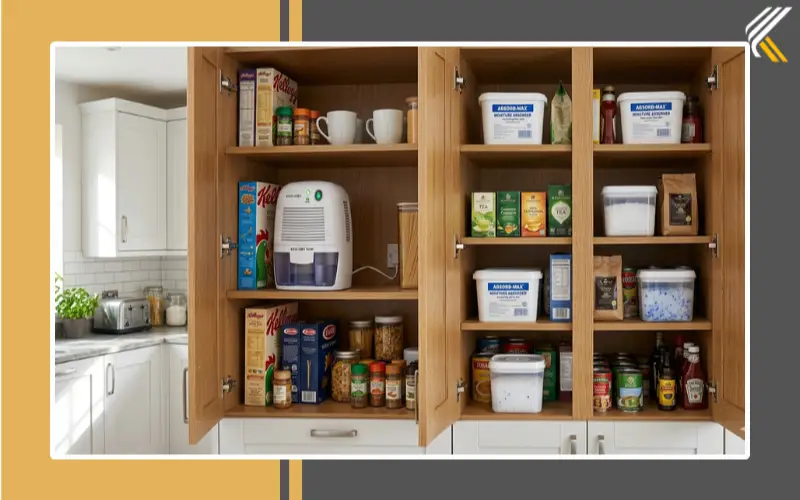
If your cabinets already smell musty, an electric dehumidifier may work better.
Homeowners with small moisture problems usually start with baking soda, silica gel packs, or charcoal before moving to electric units.
| Moisture Level | Recommended Solution |
|---|---|
| Mild humidity | Baking soda or silica gel |
| Moderate moisture | Calcium chloride absorber |
| Severe dampness | Mini electric dehumidifier |
| Hidden mold problems | Moisture control + ventilation |
| Under-sink condensation | Leak repair + absorber packs |
Where to Place a Kitchen Cupboard Dehumidifier
Placing a kitchen cupboard dehumidifier in the right area helps improve moisture control.
The best places include:
-
- Under-sink cabinets
-
- Pantry corners
-
- Cabinets near dishwashers
-
- Areas with poor airflow
-
- Lower cabinets near plumbing lines
Avoid placing electric dehumidifiers directly beside water splashes or leaking pipes.
For better results, keep the cabinet area as enclosed as possible while using a mini dehumidifier.
Best Solution for Under-Sink Cabinets
Under-sink cupboards trap the most moisture because of plumbing lines and poor airflow.
I had this problem in my own kitchen during summer. Even after cleaning the cabinet, the smell returned within days. Later, I found a tiny leak under the pipe joint. The moisture was slowly collecting behind cleaning bottles where I could not easily see it.
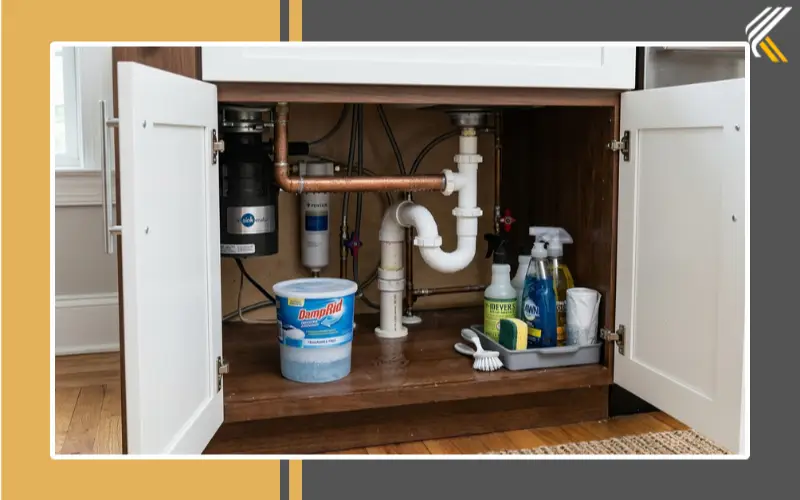
Cold water pipes can create condensation during humid weather, especially inside closed cabinets with poor airflow.
After fixing the leak, I left the cabinet doors open for better airflow and added moisture absorbers inside. Within a week, the damp smell became much weaker. A few days later, the cabinet finally smelled fresh again.
To protect under-sink cabinets:
-
- Fix leaks immediately
-
- Leave space around pipes
-
- Use shelf liners
-
- Add moisture absorbers
-
- Keep cleaning supplies organized
-
- Open cabinet doors sometimes for airflow
This area usually becomes the first place where mold and musty smells develop inside kitchens. Proper cabinet installation and pipe spacing can also help reduce long-term condensation problems under the sink area.
How to Prevent Moisture in Kitchen Cabinets Naturally
You do not always need expensive products. Small daily habits can reduce moisture buildup.

Use Your Kitchen Exhaust Fan
Run the exhaust fan while cooking and for 10 to 15 minutes afterward.
This helps remove steam before it enters cabinets. Energy Star also recommends proper kitchen ventilation to help reduce excess indoor moisture and improve airflow.
Improve Air Circulation
Do not pack cupboards too tightly. Air needs space to move.
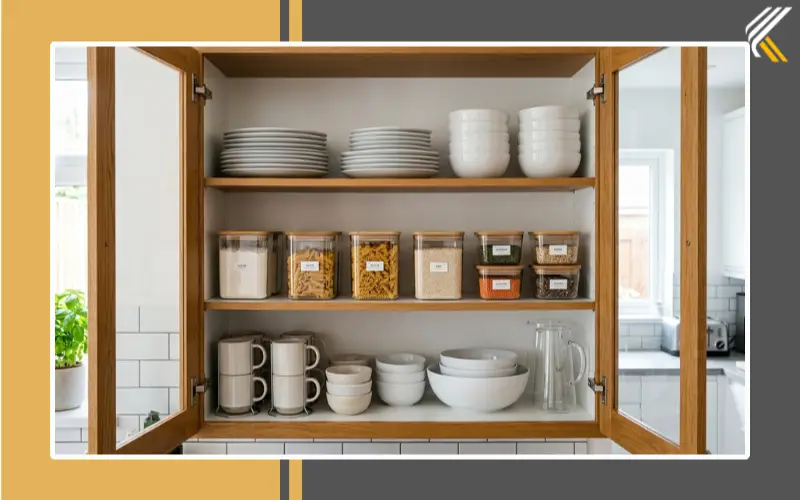
Leave small gaps between dishes and containers. Adding sliding storage solutions can also improve airflow inside deep cabinets where trapped humidity usually builds up.
Wipe Away Excess Moisture
Dry wet dishes before storing them inside cupboards.
Also wipe water around the sink area regularly.
Keep Temperature Consistent
Sudden temperature changes can create condensation inside cabinets.
Try to keep your kitchen temperature stable.
Use Airtight Containers
Pantry items like flour, rice, and sugar can absorb moisture.
Airtight containers help keep food dry and fresh.
Use Baking Soda for Odor Control
Baking soda can help absorb mild moisture and reduce musty smells inside cabinets. Place an open box inside problem cupboards and replace it every few months.
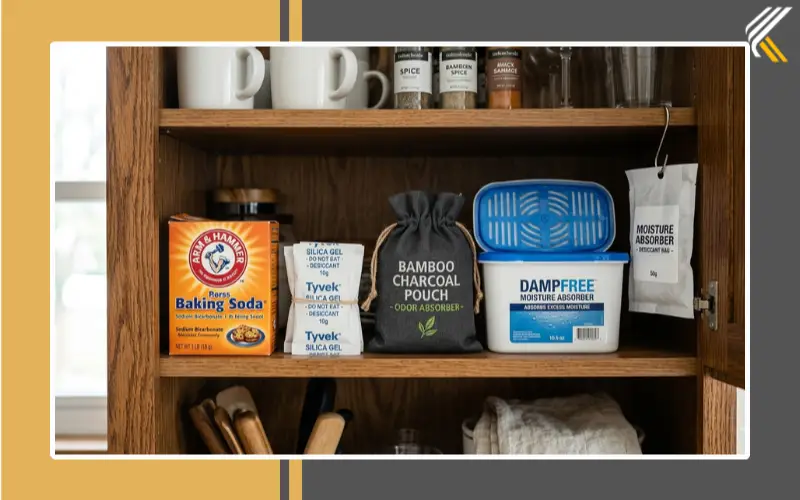
This is a simple DIY method many homeowners use before buying larger moisture-control products.
Common Mistakes That Make Cabinet Moisture Worse
Many people accidentally trap more moisture inside cupboards.
Avoid these mistakes:
-
- Storing wet dishes
-
- Ignoring small leaks
-
- Blocking airflow
-
- Overfilling shelves
-
- Skipping regular cleaning
-
- Closing damp cabinets immediately
I used to place washed food containers inside the cabinet before they fully dried. It seemed harmless at the time, but that habit kept trapping moisture inside the shelves. Once I started drying everything completely first, the cabinets stayed much fresher.
Even small habits can increase mold growth over time. Keeping cabinets properly organized can also help reduce overcrowding and improve ventilation around stored items.
How to Remove Damp Smell From Kitchen Cabinets
If your cabinets already smell musty, start with a deep cleaning.
Follow these steps:
-
- Empty the cabinet
-
- Clean surfaces with vinegar solution
-
- Let the area dry fully
-
- Fix any leaks
-
- Add moisture absorbers
-
- Improve ventilation
The smell usually fades once the moisture source is removed.
How Long Does It Take?
Mild cabinet odors may improve within a few days, while severe moisture problems can take several weeks to fully disappear depending on airflow and humidity levels.
When I cleaned my under-sink cabinet, leaving the doors open overnight helped more than I expected. The trapped smell slowly disappeared once fresh air started circulating properly.
Seasonal Humidity Problems in Kitchens
Humidity problems often become worse during summer or rainy seasons.
Warm air carries more moisture. Steam also stays trapped longer in closed kitchens.
This is especially common in humid states where kitchens stay warm for long periods during summer.
During humid months:
-
- Use exhaust fans more often
-
- Check under-sink cabinets weekly
-
- Replace moisture absorbers regularly
-
- Open windows when possible
Seasonal care helps protect cabinets all year.
Can Moisture Damage Kitchen Cabinets Permanently?
Yes. Long-term moisture exposure can permanently damage cabinets.
Common problems include:
-
- Warped wood
-
- Mold stains
-
- Soft particle board
-
- Peeling laminate
-
- Loose hinges
-
- Rotting cabinet bases
Replacing damaged cabinets can become expensive. Early prevention is much cheaper. Small signs of swelling, peeling laminate, or water damage can often be improved before full cabinet replacement becomes necessary.
Homeowners with MDF cabinets usually notice swelling faster because MDF absorbs moisture more quickly than plywood or solid wood.
Weekly Kitchen Cabinet Moisture Checklist
- Check under-sink pipes for leaks
- Wipe excess water near sink areas
- Dry dishes before storing
- Replace old moisture absorbers
- Open cabinets occasionally for airflow
- Check for musty smells or mold spots
- Run exhaust fan after cooking

Final Thoughts
A kitchen cupboard dehumidifier can make a big difference in keeping cabinets clean, dry, and mold-free. Moisture problems usually start small, but they can slowly damage wood, create bad smells, and affect kitchen hygiene.
From personal experience, the biggest mistake is ignoring early signs like musty smells or sticky cabinet doors. I delayed fixing the issue because the cabinet still looked normal from the outside. Later, I noticed slight swelling near the cabinet base, especially around the corners close to the sink pipes.
After improving airflow, fixing the small leak, and using moisture absorbers regularly, the kitchen finally felt fresher and cleaner. Small changes really do help. If I had handled the moisture problem earlier, I could have avoided some of the cabinet damage completely.
The best solution is a mix of moisture control, regular cleaning, good ventilation, and quick leak repairs. When you stay consistent, your kitchen cabinets can stay dry and last for many years.
Signs Your Cabinets May Need Replacement
- Soft cabinet flooring
- Severe swelling
- Black mold inside wood
- Peeling laminate
- Persistent moisture smell after cleaning
Frequently Asked Questions
Can moisture ruin kitchen cabinets?
Yes. Too much moisture can cause swelling, mold growth, peeling laminate, and wood warping.
Are silica gel packs safe for kitchen cabinets?
Yes. Silica gel packs are commonly used to absorb moisture in cabinets and pantry spaces.
How long do cabinet moisture absorbers last?
Most moisture absorbers last between 30 and 60 days, depending on humidity levels.
Should I use a dehumidifier or moisture absorber?
Use a moisture absorber for mild humidity problems. Use an electric dehumidifier for severe moisture issues.
Can damp cabinets attract termites?
Yes. Moisture-damaged wood can attract termites and other pests over time.
About Kitchenoro
Kitchenoro is your trusted partner for complete kitchen remodeling, renovation, and elegant design. We specialize in premium cabinet installation, countertops, and transforming kitchens into luxurious, functional spaces. With expert craftsmanship and tailored solutions, Kitchenoro turns your vision into reality. Contact us to elevate your kitchen’s style and functionality!