
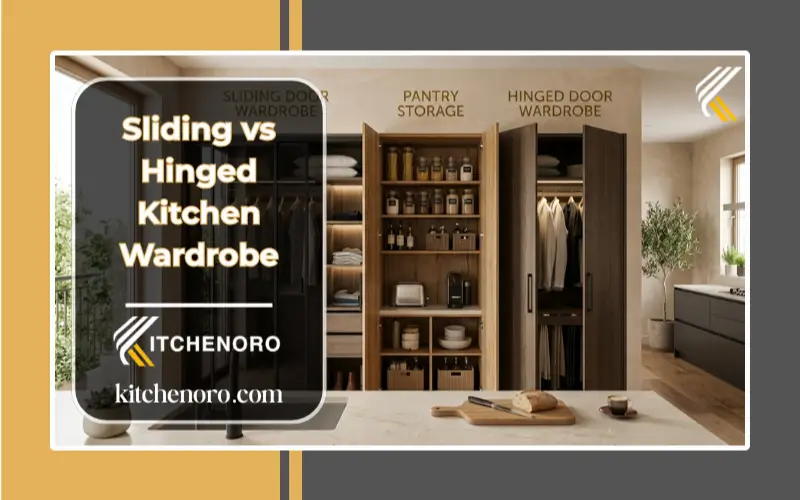
A kitchen wardrobe may seem like a small design decision, but choosing the wrong cabinet system can create daily frustration that homeowners notice every time they cook. In many compact kitchens, hinged cabinet doors end up blocking walkways, colliding with appliances, or making the space feel cramped during busy routines. At the same time, many homeowners choose sliding wardrobes purely for their modern appearance, only to realize later that limited shelf access and track maintenance can become inconvenient over time. This is one of the most common mistakes people make during kitchen renovations — prioritizing appearance before understanding how the kitchen will actually function in daily life.
In several real-world kitchen remodels, especially in apartments and modern modular kitchens, homeowners eventually cared less about aesthetics and more about practical usability. After months of daily cooking, the biggest concerns became accessibility, cleaning effort, movement flow, pantry organization, and long-term maintenance. That’s why the choice between sliding and hinged kitchen wardrobes is no longer just about style. It directly affects kitchen workflow, storage convenience, durability, and everyday comfort. Whether you live in a compact apartment, a family home, or a luxury modular kitchen, choosing the right wardrobe system can make your kitchen feel significantly more efficient, organized, and easier to use long-term. For homeowners planning a more functional cooking space, improving overall kitchen organization systems can make daily meal preparation much easier and less stressful.
Sliding vs Hinged Wardrobe- Short Summary:
Sliding and hinged kitchen wardrobes both offer unique advantages, but the best choice depends on your kitchen size, storage needs, lifestyle, and daily cooking habits. Sliding wardrobes are ideal for compact modern kitchens because they save space and create a sleek appearance, while hinged wardrobes provide better accessibility, easier maintenance, and more practical pantry organization. This guide compares both options in terms of durability, cost, cleaning, safety, workflow, and long-term usability to help homeowners choose the most functional kitchen storage solution for their space.
Key Takeaways
- Sliding kitchen wardrobes are best for compact and modern kitchens where saving space matters most.
- Hinged wardrobes provide better accessibility, pantry visibility, and easier long-term maintenance.
- Sliding systems create a cleaner minimalist appearance but may require more track cleaning over time.
- Hinged cabinets are often more practical for busy family kitchens and frequently used storage areas.
- Many modern kitchens now combine both systems for better functionality and aesthetics.
Quick Verdict: Sliding vs Hinged Kitchen Wardrobe
| If You Want… | Best Choice |
|---|---|
| Maximum accessibility | Hinged |
| Space-saving design | Sliding |
| Lower maintenance | Hinged |
| Modern aesthetics | Sliding |
| Better pantry organization | Hinged |
| Compact kitchen optimization | Sliding |
| Easier installation | Hinged |
| Minimalist appearance | Sliding |
| Luxury modular kitchen look | Sliding |
| Long-term durability | Hinged |
Why This Decision Matters More Than Most Homeowners Realize
Many homeowners focus only on appearance when choosing kitchen wardrobes, but the wrong cabinet system can create daily frustration.
For example:
-
- hinged doors may block narrow walkways in small kitchens
-
- sliding tracks may collect grease in heavy-cooking households
-
- poor pantry accessibility can slow down cooking workflow
-
- low-quality hardware can increase long-term maintenance costs
That’s why designers often recommend choosing kitchen wardrobe systems based on lifestyle and kitchen functionality rather than appearance alone.
“In many modern kitchens, homeowners regret choosing cabinet systems based only on appearance. Long-term accessibility and kitchen workflow usually have a much bigger impact on daily satisfaction.”
What Is a Sliding Kitchen Wardrobe?
A sliding kitchen wardrobe uses doors that move horizontally on tracks instead of swinging outward. These systems are commonly used in modern modular kitchens and small apartments where maximizing floor space is important.
Sliding wardrobes typically include:
-
- top and bottom tracks
-
- rollers or wheel mechanisms
-
- soft-close systems
-
- aluminum or glass panels
-
- laminate or acrylic finishes
They are especially popular in:
-
- compact kitchens
-
- open-concept layouts
-
- minimalist interiors
-
- luxury modular kitchens
-
- apartment kitchens
Main Benefits of Sliding Kitchen Wardrobes
-
- Saves walking space
-
- Creates a sleek modern appearance
-
- Ideal for narrow kitchens
-
- Works well for tall storage units
-
- Reduces door swing obstruction
-
- Makes small kitchens feel cleaner and less crowded
Common Drawbacks
-
- Partial cabinet access at one time
-
- Tracks collect grease and dust
-
- Repairs can be more expensive
-
- Requires accurate installation
-
- May become noisy over time with poor maintenance
What Is a Hinged Kitchen Wardrobe?
A hinged kitchen wardrobe uses doors attached with side-mounted hinges that swing outward when opened. This remains one of the most practical and widely used kitchen cabinet systems.
Modern hinged wardrobes often feature:
-
- soft-close hinges
-
- hydraulic mechanisms
-
- pull-out organizers
-
- adjustable shelves
-
- modular pantry accessories
They are common in:
-
- family kitchens
-
- large kitchens
-
- traditional homes
-
- pantry storage systems
-
- high-access cooking zones
Main Benefits of Hinged Kitchen Wardrobes
-
- Full cabinet visibility
-
- Easier organization
-
- Lower maintenance costs
-
- Better accessibility
-
- Easier hardware replacement
-
- Better for frequent daily use
Common Drawbacks
-
- Requires door clearance space
-
- Can interrupt movement in tight kitchens
-
- Less effective in ultra-compact layouts
Sliding vs Hinged Wardrobe: Quick Pros & Cons
| Type | Biggest Advantage | Biggest Drawback |
|---|---|---|
| Sliding Wardrobe | Saves floor space | Limited cabinet access |
| Hinged Wardrobe | Full accessibility | Requires door clearance |
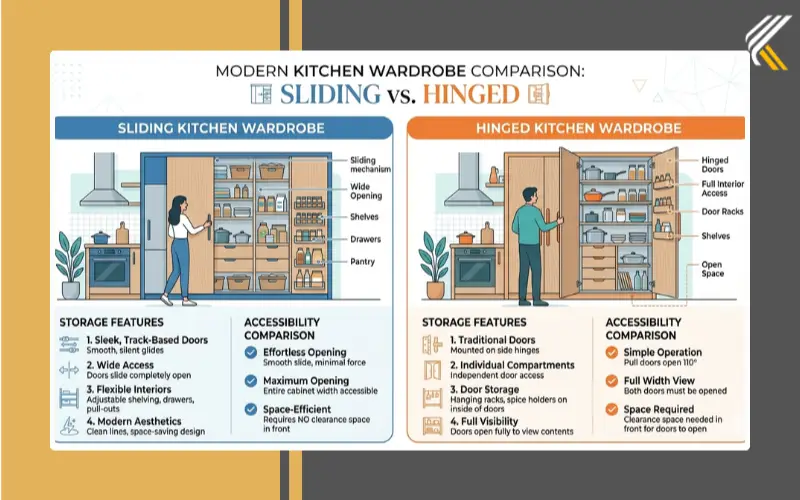
Sliding vs Hinged Kitchen Wardrobe: Quick Comparison
| Feature | Sliding Wardrobe | Hinged Wardrobe |
|---|---|---|
| Space Saving | Excellent | Moderate |
| Full Storage Access | Partial | Full |
| Maintenance | Higher | Lower |
| Installation Cost | Higher | More Affordable |
| Modern Appearance | Excellent | Good |
| Long-Term Durability | Good | Excellent |
| Cleaning Ease | Moderate | Easy |
| Pantry Accessibility | Moderate | Excellent |
| Repair Simplicity | Moderate | Easy |
| Best for Small Kitchens | Excellent | Moderate |
| Best for Families | Good | Excellent |
| Best for Luxury Kitchens | Excellent | Good |
Which Saves More Space?
Sliding wardrobes are usually the better choice for small kitchens because they eliminate the need for outward-opening doors.
In compact kitchens, even a few inches of extra clearance can improve movement significantly.
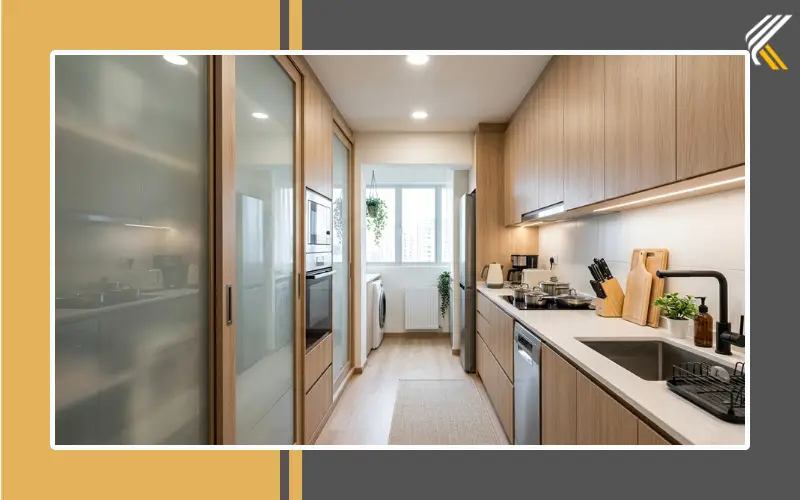
Why Sliding Doors Work Better in Tight Kitchens
-
- No door swing interference
-
- Better walkway clearance
-
- Easier movement around appliances
-
- Less visual clutter
-
- Improved kitchen workflow
Best Kitchen Layouts for Sliding Wardrobes
-
- Galley kitchens
-
- One-wall kitchens
-
- Studio apartments
-
- Narrow modular kitchens
Many homeowners with apartment kitchens prefer sliding systems because they help the kitchen feel larger and less cramped.
Small Kitchen Expert Tip
If your kitchen feels crowded when multiple cabinets are open at once, sliding wardrobes can significantly improve movement flow.
In one compact apartment kitchen renovation, the homeowner originally planned to use hinged pantry cabinets along a narrow walkway. After installation planning, it became obvious that the open doors would constantly block movement near the dishwasher and refrigerator. Switching to sliding wardrobe doors immediately made the kitchen feel more open and easier to navigate during daily cooking.
Kitchen workflow and movement efficiency are also closely connected to layout planning principles recommended by the National Association of Home Builders (NAHB).
Which Is Easier to Access?
Hinged wardrobes provide much better accessibility because the entire cabinet becomes visible when opened.
This makes them ideal for:
-
- pantry storage
-
- cookware organization
-
- daily-use cabinets
-
- deep shelving systems
-
- family kitchens
Why Hinged Cabinets Improve Accessibility
-
- Full shelf visibility
-
- Faster item retrieval
-
- Better organization flexibility
-
- Easier appliance storage
Sliding systems only expose one side at a time, which may feel inconvenient in busy kitchens.
Expert Tip
Designers often recommend hinged cabinets for frequently used storage zones and sliding doors for decorative or secondary storage areas.
Many homeowners who cook frequently still prefer hinged wardrobes for daily-use storage because opening the entire cabinet at once feels faster and more convenient. In several family kitchens, hinged pantry systems made it easier to organize snacks, spices, and cookware without constantly sliding doors back and forth while cooking.
Which Is Better for Small Kitchens?
Sliding kitchen wardrobes are usually the best option for compact kitchens because they improve movement efficiency without blocking pathways.
Benefits for Small Kitchens
-
- Better traffic flow
-
- Cleaner appearance
-
- Improved appliance clearance
-
- Space-saving functionality
-
- Better movement in narrow walkways
Example
In narrow apartment kitchens, hinged pantry doors can obstruct dishwashers, drawers, or walkways. Sliding systems eliminate this problem.
Best for Apartment Owners
Sliding wardrobes are especially useful for:
-
- condos
-
- studio apartments
-
- compact urban homes
-
- minimalist kitchens
These users often prioritize:
-
- movement efficiency
-
- cleaner layouts
-
- modern appearance
-
- storage optimization
Which Is Better for Large Kitchens?
Large kitchens often benefit more from hinged wardrobes because accessibility becomes more important than saving clearance space.
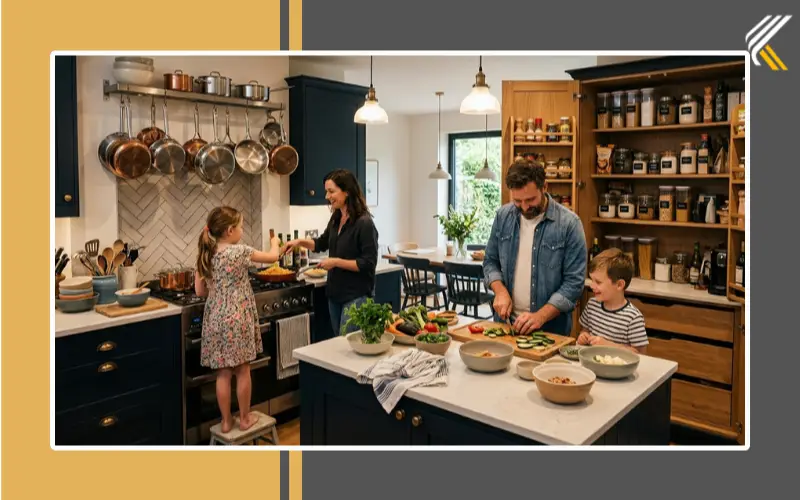
Hinged Wardrobes Work Best In:
-
- U-shaped kitchens
-
- family kitchens
-
- farmhouse kitchens
-
- spacious modular layouts
They also support:
-
- pull-out organizers
-
- larger pantry systems
-
- heavy cookware storage
-
- easier shelf customization
Why Families Often Prefer Hinged Cabinets
In busy kitchens where multiple people cook together, full cabinet access becomes more important than saving floor space.
Sliding vs Hinged Kitchen Wardrobe for Pantry Storage
For pantry organization, hinged wardrobes are usually the superior option.
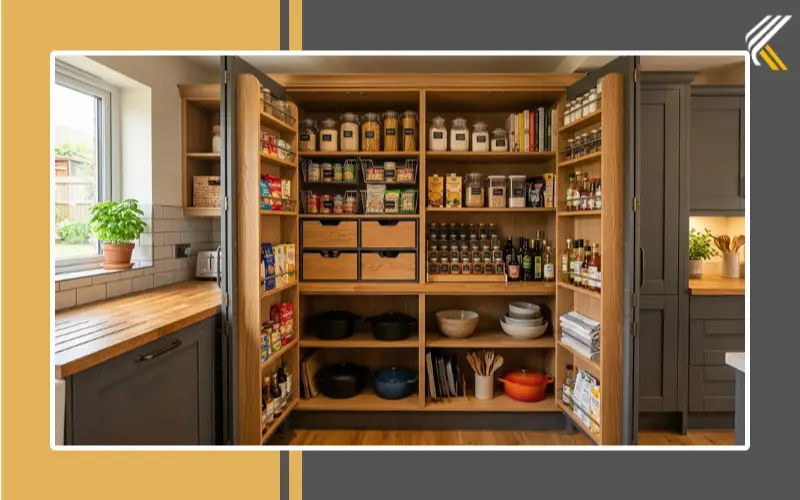
Pantries require:
-
- full shelf visibility
-
- quick item access
-
- easier organization
-
- better storage flexibility
| Pantry Feature | Sliding | Hinged |
|---|---|---|
| Shelf Visibility | Partial | Full |
| Bulk Storage Access | Moderate | Excellent |
| Cleaning Ease | Moderate | Easy |
| Organization Flexibility | Good | Excellent |
Best Choice for Busy Family Kitchens
Many families prefer hinged pantry wardrobes because they allow faster access during cooking and grocery organization.
Which Looks More Modern?
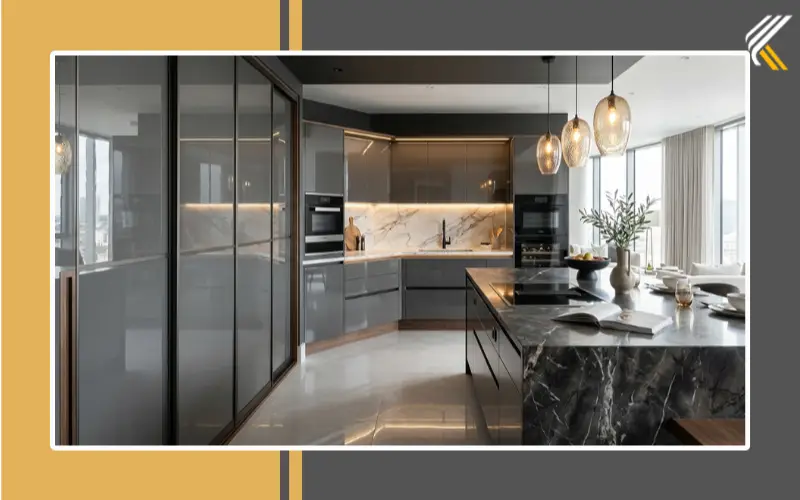
Sliding wardrobes are widely considered more modern because of their sleek, seamless appearance.
They pair especially well with:
-
- high-gloss finishes
-
- handleless cabinetry
-
- minimalist kitchens
-
- luxury modular designs
-
- contemporary interiors
Popular Sliding Wardrobe Materials
-
- Frosted glass
-
- Acrylic panels
-
- Matte laminates
-
- Aluminum frames
-
- Mirror finishes
Hinged wardrobes, meanwhile, work beautifully in:
-
- traditional kitchens
-
- rustic interiors
-
- transitional kitchen styles
Best for Design-Focused Homeowners
Interior-design-conscious homeowners often choose sliding wardrobes because they create a cleaner, more premium visual appearance.
Which Is Easier to Clean?
Hinged wardrobes are usually easier to maintain over time.
Kitchens naturally produce:
-
- grease
-
- steam
-
- dust
-
- food residue
Sliding tracks can trap debris and require regular cleaning to maintain smooth movement.
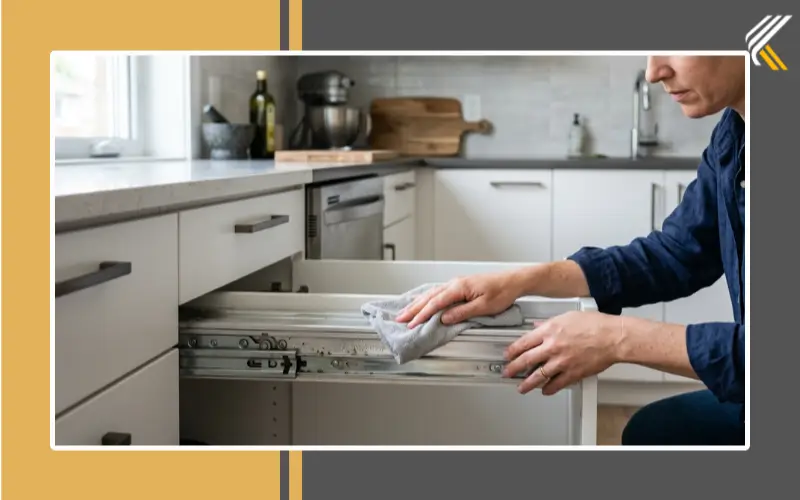
Sliding Wardrobe Maintenance Issues
-
- Grease buildup inside tracks
-
- Roller wear
-
- Dust accumulation
-
- Track alignment problems
Hinged Wardrobe Maintenance Issues
-
- Loose hinges
-
- Minor door sagging
-
- Occasional hinge adjustments
Cleaning Verdict
If you want the lowest-maintenance kitchen storage solution, hinged wardrobes are often the better long-term choice.
One common issue noticed in high-use kitchens is grease buildup inside sliding tracks, especially near cooking zones. Homeowners who rarely deep-clean cabinet hardware often find hinged systems easier to maintain long-term because there are fewer grooves and moving parts collecting debris.
Best for Budget-Conscious Homeowners
Many homeowners choose hinged wardrobes because repairs and hardware replacement are generally simpler and more affordable.
Quick Maintenance Checklist
Sliding Wardrobes
- Clean tracks weekly
- Remove grease buildup regularly
- Inspect rollers every few months
- Avoid overloading heavy doors
Hinged Wardrobes
- Tighten loose hinges occasionally
- Clean hinge joints regularly
- Avoid slamming cabinet doors
- Lubricate soft-close hinges when needed
How Kitchen Moisture Affects Sliding vs Hinged Wardrobes
Kitchens experience constant humidity, steam, heat, and grease exposure. These conditions can affect cabinet performance over time.
Sliding Wardrobes in Humid Kitchens
Sliding systems are more vulnerable to:
-
- moisture buildup inside tracks
-
- grease accumulation
-
- roller wear
-
- alignment problems
Best Moisture-Resistant Features for Sliding Systems
-
- Aluminum-framed doors
-
- Stainless steel tracks
-
- Rust-resistant rollers
-
- Moisture-resistant laminate finishes
Hinged Wardrobes in Humid Kitchens
Hinged systems generally handle moisture better because fewer moving components are exposed.
However, lower-quality hinges may still experience:
-
- rust
-
- loosening
-
- door sagging over time
Best Moisture-Resistant Features for Hinged Systems
-
- Stainless steel hinges
-
- Marine-grade plywood
-
- Anti-rust coatings
-
- Matte laminate finishes
Expert Tip
In high-humidity kitchens, choosing corrosion-resistant hardware is just as important as choosing the cabinet style itself.
According to the National Kitchen and Bath Association (NKBA), durable and moisture-resistant materials play a major role in long-term kitchen performance and storage longevity.
Which Kitchen Wardrobe Type Is Quieter?
Noise can become noticeable in busy kitchens with frequent cabinet use.
Sliding Wardrobes
Premium sliding systems can operate quietly, but lower-quality tracks may develop:
-
- rattling sounds
-
- scraping noise
-
- roller vibration
Dust buildup can also increase operational noise over time.
Hinged Wardrobes
Hinged systems are usually quieter long-term, especially with soft-close hydraulic hinges.
Verdict
For the quietest kitchen experience, high-quality hinged wardrobes often perform better over time.
In many modern modular kitchens, lower-quality sliding tracks tend to become noisier after a few years of daily use, especially if dust accumulates inside the rollers. By comparison, soft-close hinged systems usually maintain smoother and quieter operation with less maintenance.
Which Is Safer for Families and Children?
Safety is an important but often overlooked factor in kitchen design.
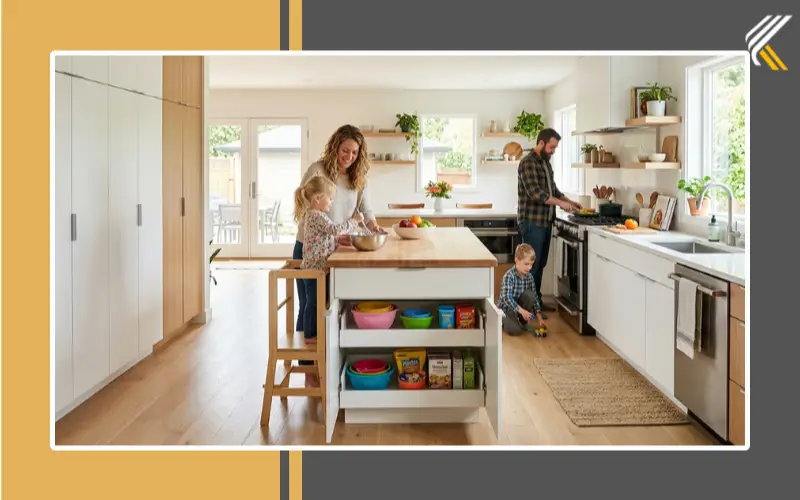
Sliding Wardrobes Safety Considerations
Advantages
-
- No outward-opening doors blocking pathways
-
- Better for narrow kitchens
-
- Reduced collision risk
Risks
-
- Heavy panels may pinch fingers
-
- Poor-quality tracks can jam
-
- Large glass panels require tempered safety glass
Hinged Wardrobes Safety Considerations
Advantages
-
- Easier emergency access
-
- Full cabinet visibility
-
- Simpler hardware systems
Risks
-
- Open doors can obstruct movement
-
- Door corners may cause accidental bumps
-
- Slamming doors may create injury risks
Safety Recommendation
Soft-close hardware is highly recommended for both sliding and hinged kitchen wardrobes.
Accessibility and safe kitchen movement are increasingly important in modern home design, especially for family and aging-in-place kitchens, as highlighted by the American Society of Interior Designers (ASID).
Which Lasts Longer?
High-quality hinged wardrobes generally last longer because their hardware systems are simpler and easier to maintain.
Sliding wardrobes rely on:
-
- tracks
-
- rollers
-
- alignment systems
-
- soft-close mechanisms
These components experience more friction over time.
Average Lifespan Expectations
| Component | Typical Lifespan |
|---|---|
| Quality kitchen hinges | 10–20+ years |
| Sliding track systems | 8–15 years |
| Soft-close hinges | 10–20 years |
| Sliding rollers | Varies by usage and maintenance |
Proper installation and regular cleaning can significantly extend hardware lifespan.
Cost Comparison in the USA
Sliding wardrobes are generally more expensive due to specialized hardware and installation requirements.
| Type | Estimated USA Cost |
|---|---|
| Hinged kitchen wardrobe | $250–$1,200 |
| Sliding kitchen wardrobe | $600–$3,500 |
| Soft-close hinges | $5–$25 each |
| Sliding track systems | $120–$600 |
Costs vary depending on:
-
- materials
-
- customization
-
- hardware quality
-
- local labor rates
Why Sliding Systems Cost More
-
- Precision installation
-
- Premium hardware
-
- Complex track systems
-
- Larger door panels
Budget Tip
If affordability and easier repairs matter most, hinged wardrobes usually provide better long-term value.
Best Materials for Sliding and Hinged Kitchen Wardrobes
The right material affects:
-
- durability
-
- moisture resistance
-
- maintenance
-
- visual appearance
Best Materials for Sliding Wardrobes
-
- Acrylic
-
- Frosted glass
-
- Aluminum frames
-
- High-gloss laminate
Best Materials for Hinged Wardrobes
-
- Plywood
-
- MDF with laminate
-
- Solid wood
-
- Matte laminate finishes
Best Hardware for Sliding Kitchen Wardrobes
Hardware quality plays a major role in durability and daily performance.
Recommended Hardware Features
-
- Soft-close hinges
-
- Stainless steel tracks
-
- Hydraulic hinge systems
-
- Rust-resistant rollers
-
- Heavy-duty aluminum frames
High-quality hardware may cost more initially, but it reduces long-term maintenance issues significantly.
Best Option by Kitchen Layout
Galley Kitchen
Best Choice: Sliding
Prevents walkway obstruction in narrow spaces.
L-Shaped Kitchen
Best Choice: Either
Depends on movement flow and available clearance.
U-Shaped Kitchen
Best Choice: Hinged
Improves accessibility across multiple storage zones.
Open-Concept Kitchen
Best Choice: Sliding
Creates a seamless modern appearance.
Large Family Kitchen
Best Choice: Hinged
Provides easier access for multiple users.
Best Hybrid Combination for Modern Kitchens
Many modern kitchens combine both systems to maximize functionality and appearance.
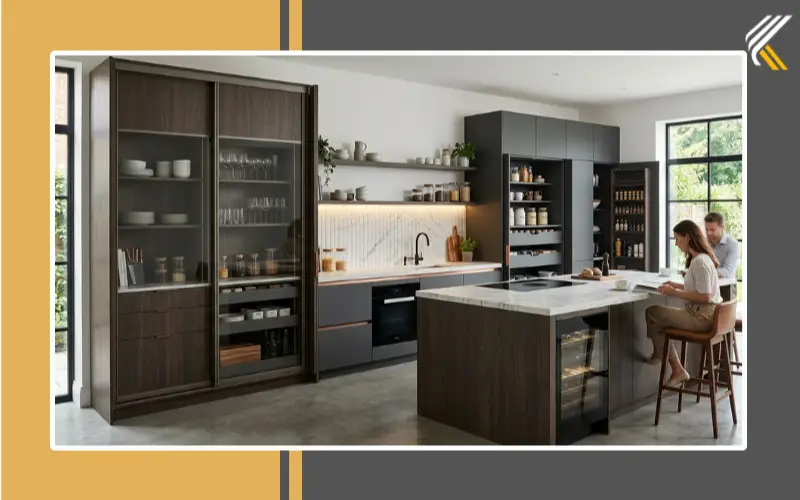
| Kitchen Area | Recommended Door Type |
|---|---|
| Tall pantry units | Hinged |
| Decorative storage walls | Sliding |
| Frequently used lower cabinets | Hinged |
| Compact appliance garages | Sliding |
| Corner storage units | Hinged |
| Modern display cabinets | Sliding |
Why Hybrid Kitchens Work Well
-
- Better accessibility
-
- Improved workflow
-
- Space optimization
-
- Balanced aesthetics
Many designers recommend hybrid layouts because they combine practicality with modern visual appeal.
Several kitchen designers now recommend hybrid cabinet layouts because homeowners often regret using only one door style throughout the kitchen. For example, sliding doors may look beautiful on tall decorative storage walls, while hinged cabinets remain far more practical for cookware and pantry areas used multiple times a day.
Professional Recommendation
For most homeowners, the best solution is not choosing only one system throughout the kitchen. Many designers recommend using sliding wardrobes in compact or decorative areas and hinged wardrobes in frequently accessed storage zones like pantries and cookware cabinets. This combination usually creates the best balance between functionality, accessibility, and modern aesthetics.
Which Is Easier to Install?
Installation difficulty is another major factor homeowners often overlook.
Sliding Wardrobes
Sliding systems require:
-
- accurate measurements
-
- precise track alignment
-
- level flooring
-
- professional installation
Even small installation mistakes can lead to:
-
- sticking doors
-
- uneven movement
-
- noisy operation
-
- premature hardware wear
Hinged Wardrobes
Hinged systems are usually:
-
- easier to install
-
- easier to adjust
-
- more DIY-friendly
-
- simpler to repair
Installation Verdict
For easier installation and lower repair complexity, hinged wardrobes are usually the more practical choice.
Best for DIY Homeowners
DIY renovators often prefer hinged wardrobes because installation and maintenance are less complex.
Avoid Sliding Kitchen Wardrobes If:
Sliding wardrobes may not be ideal if:
-
- you access storage constantly
-
- you prefer full shelf visibility
-
- your kitchen experiences heavy grease buildup
-
- your budget is limited
-
- you want the lowest maintenance option
In these situations, hinged wardrobes often provide better long-term convenience.
Best Choice Based on Lifestyle
Best for Apartment Owners
Sliding wardrobes maximize compact kitchen space and improve movement flow.
Best for Large Families
Hinged wardrobes provide easier and faster storage access during busy cooking routines.
Best for Seniors
Hinged systems offer better visibility and easier shelf accessibility.
Best for Luxury Kitchens
Sliding wardrobes complement modern modular kitchen aesthetics beautifully.
Best for Rental Homes
Hinged wardrobes are easier and more affordable to repair or replace.
Best for Minimalist Kitchens
Sliding wardrobes create cleaner visual lines and a seamless modern appearance.
Best Kitchen Wardrobe Choice by User Type
| User Type | Best Choice | Why |
|---|---|---|
| Apartment owners | Sliding | Saves floor space |
| Large families | Hinged | Faster pantry access |
| Luxury kitchen owners | Sliding | Modern aesthetic |
| Budget-conscious homeowners | Hinged | Lower repair costs |
| Seniors | Hinged | Easier accessibility |
| DIY renovators | Hinged | Simpler installation |
| Minimalist kitchens | Sliding | Cleaner visual lines |
Common Problems With Sliding Kitchen Wardrobes
Common Issues
-
- Track clogging
-
- Roller damage
-
- Misalignment
-
- Limited access
-
- Higher repair costs
Prevention Tips
-
- Clean tracks weekly
-
- Avoid overloading doors
-
- Choose soft-close systems
-
- Use premium hardware
Common Problems With Hinged Kitchen Wardrobes
Common Issues
-
- Loose hinges
-
- Door collision
-
- Door sagging
-
- Clearance obstruction
Prevention Tips
-
- Tighten hinges regularly
-
- Install soft-close systems
-
- Avoid slamming doors
-
- Use durable hardware
Which Option Adds More Home Value?
Both systems can improve kitchen appeal when properly installed.
However:
-
- Sliding wardrobes often increase modern visual appeal
-
- Hinged wardrobes improve practicality and accessibility
For resale value:
-
- luxury apartments often favor sliding systems
-
- family homes often favor hinged systems
Common Kitchen Wardrobe Mistakes to Avoid
- Choosing sliding wardrobes without considering pantry accessibility
- Installing hinged doors in ultra-narrow kitchens
- Ignoring hardware quality to reduce upfront costs
- Using low-quality tracks in humid kitchens
- Prioritizing appearance over daily usability
- Skipping soft-close systems in family kitchens
Which Kitchen Wardrobe Should You Choose?
Choose sliding kitchen wardrobes if you:
-
- have a compact kitchen
-
- want a sleek modern look
-
- prioritize space-saving design
-
- prefer minimalist interiors
-
- want a luxury modular appearance
Choose hinged kitchen wardrobes if you:
-
- want full cabinet access
-
- prioritize durability
-
- need efficient pantry organization
-
- prefer lower maintenance
-
- cook frequently in busy family kitchens
For many homeowners, the best solution is actually a hybrid combination that uses both systems strategically throughout the kitchen.
The ideal kitchen wardrobe system is the one that improves your daily cooking workflow, storage convenience, and long-term kitchen usability.
In real-world kitchen renovations, the best results often come from prioritizing functionality first and aesthetics second. Many homeowners initially choose sliding wardrobes purely for appearance, but later realize that accessibility and maintenance matter far more in daily kitchen use. That’s why combining both systems strategically has become increasingly popular in modern kitchen design.
FAQs
Are sliding kitchen wardrobes durable?
Yes, high-quality sliding wardrobes can last many years when fitted with premium tracks and rollers and maintained properly.
Do sliding kitchen doors save space?
Yes. Sliding doors eliminate outward door swing, making them ideal for compact kitchens and narrow layouts.
Which is cheaper: sliding or hinged kitchen wardrobes?
Hinged wardrobes are usually more affordable because they use simpler hardware and easier installation systems.
Are sliding kitchen cabinets hard to clean?
The tracks can collect grease and dust, so they generally require more maintenance than hinged cabinets.
Are hinged kitchen wardrobes outdated?
No. Modern hinged wardrobes with soft-close systems remain one of the most practical kitchen storage solutions.
Which is best for pantry storage?
Hinged wardrobes are usually better for pantry storage because they provide full cabinet visibility and easier access.
What is the lifespan of sliding wardrobe tracks?
Quality sliding track systems can last around 8–15 years depending on usage, maintenance, and hardware quality.
Which kitchen cabinet style is best for small apartments?
Sliding wardrobes are usually better for small apartments because they improve movement flow and maximize usable space.
Which kitchen wardrobe is easier to maintain?
Hinged wardrobes are generally easier to maintain because they use simpler hardware and do not have sliding tracks that collect grease or dust.
Before You Choose Your Kitchen Wardrobe Style, Ask Yourself:
- Is my kitchen compact or spacious?
- How often do I access pantry storage daily?
- Do I prioritize aesthetics or accessibility?
- Am I comfortable with regular track maintenance?
- Will multiple people use the kitchen at the same time?
- Do I want a modern minimalist appearance or maximum practicality?
Conclusion
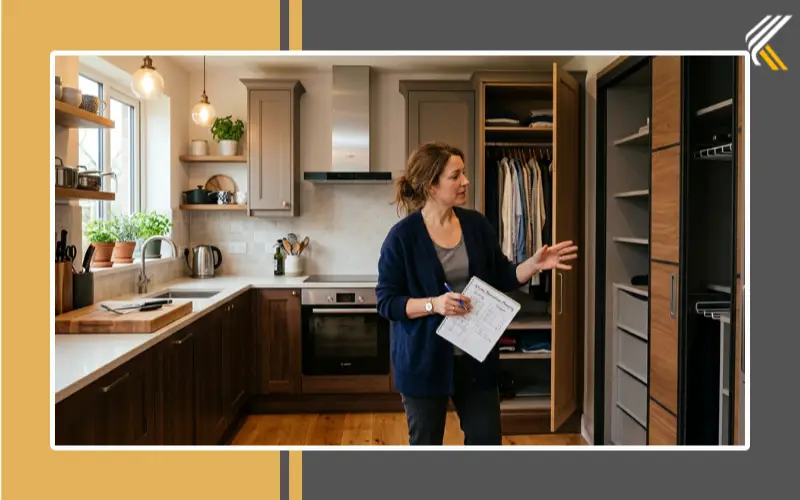
Choosing between sliding and hinged kitchen wardrobes ultimately comes down to how your kitchen functions every day. Sliding wardrobes work exceptionally well in compact kitchens where movement space is limited and homeowners want a sleek, modern appearance. Hinged wardrobes, on the other hand, remain one of the most practical options for families and heavy-use kitchens because they provide better accessibility, easier organization, and lower long-term maintenance. While both systems have advantages, the best choice depends on your kitchen layout, cooking habits, storage priorities, and how frequently you access different areas of the kitchen.
In real kitchen renovations, many homeowners initially focus heavily on aesthetics but later realize that functionality has a much bigger impact on daily satisfaction. Some homeowners regret installing large hinged pantry doors in narrow kitchens because they interrupt movement, while others find sliding wardrobes less convenient for frequently used storage areas. This is why many experienced kitchen designers now recommend a hybrid approach that combines both systems strategically throughout the kitchen. From a long-term usability perspective, the ideal kitchen wardrobe system is the one that supports your lifestyle, improves your kitchen workflow, and remains comfortable and practical to use for years after the renovation is complete.
About Kitchenoro
Kitchenoro is your trusted partner for complete kitchen remodeling, renovation, and elegant design. We specialize in premium cabinet installation, countertops, and transforming kitchens into luxurious, functional spaces. With expert craftsmanship and tailored solutions, Kitchenoro turns your vision into reality. Contact us to elevate your kitchen’s style and functionality!