
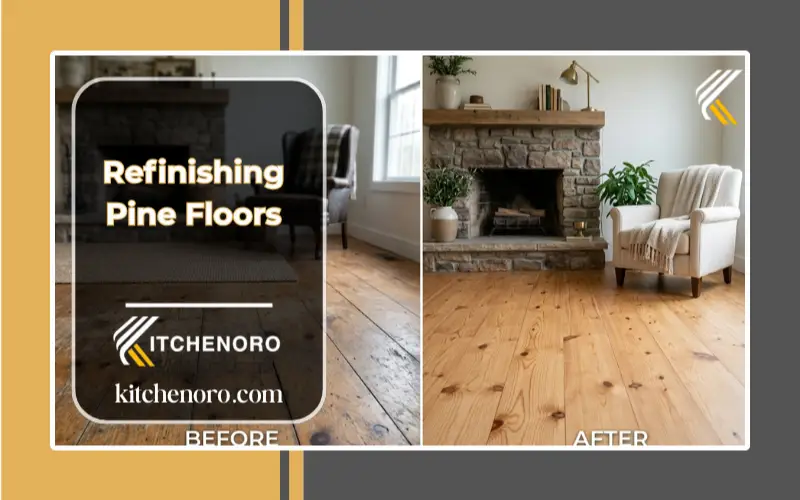
Refinishing pine floors is a great way to restore worn flooring without the expense of replacement. Many homeowners worry about scratches, dents, faded finishes, or uneven stain results, especially since pine is softer than many hardwood species. These concerns are common, but most pine floors can be successfully restored with the right approach. Pine is just one of many flooring options homeowners consider when upgrading their space, and our guide to kitchen flooring options explains how different materials compare in durability, maintenance, and appearance.
Whether you are working with old-growth pine in a historic home or newer pine flooring, proper sanding, stain preparation, and finish selection can dramatically improve the floor’s appearance. This guide covers the key steps, common mistakes, and expert tips to help you achieve lasting results.
Refinishing Pine Floors- Short Summary:
Refinishing pine floors is an affordable way to restore worn flooring, improve appearance, and preserve the character of your home. This guide explains how to sand, stain, and finish pine floors properly while avoiding common mistakes, reducing blotchy stain, and achieving long-lasting results.
Can Pine Floors Be Refinished?
Yes, most pine floors can be refinished multiple times. Floors with surface scratches, worn finishes, minor dents, and discoloration are usually good candidates for restoration.
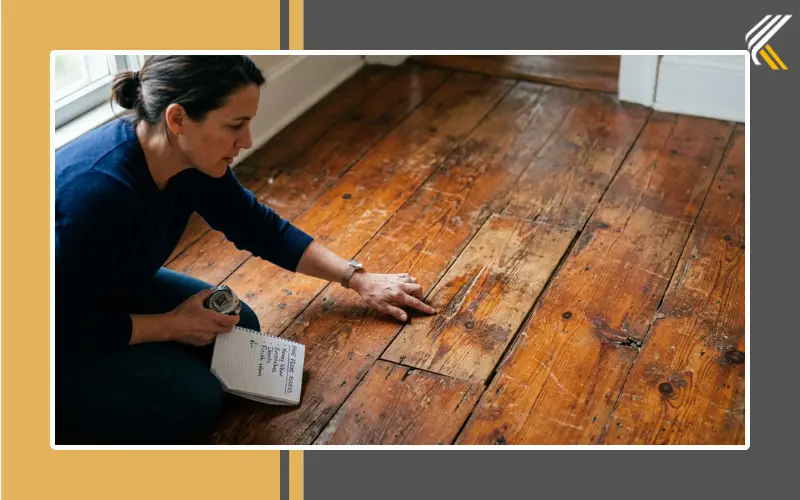
However, severe water damage, rot, termite damage, or structurally weak boards may require replacement instead of refinishing. Before starting, inspect the floor carefully to determine its condition.
| Floor Condition | Recommended Solution |
|---|---|
| Surface scratches | Refinish |
| Worn finish | Refinish |
| Minor dents | Refinish |
| Deep stains | Refinish |
| Peeling finish | Refinish |
| Severe water damage | Replace affected boards |
| Rot or structural damage | Replace |
| Termite damage | Repair or replace |
Why Refinish Pine Floors Instead of Replacing Them?
Many homeowners assume old pine floors need replacement. In reality, refinishing is often the more affordable option.
Refinishing preserves the original character of the floor while improving its appearance. This is especially valuable in older homes where original pine flooring contributes to the home’s charm and history.
For many homeowners, refinishing costs far less than installing new flooring while delivering impressive results.
Why Pine Floors Require Special Care
Pine behaves differently from hardwood flooring. Because it is softer, sanding mistakes can become visible quickly. Pine also contains areas of varying density that absorb stain differently. Understanding how pine compares to other wood flooring materials can help you choose the right option for future projects, especially when comparing engineered and solid hardwood flooring.
Older homes may contain old-growth pine flooring. These boards are often denser and more durable than modern pine. When refinishing old pine floors, preserve natural knots, grain patterns, and character marks whenever possible.
How to Refinish Pine Floors
Start by removing furniture, rugs, and obstacles from the room. Inspect the floor for loose boards, protruding nails, cracks, and damaged areas.
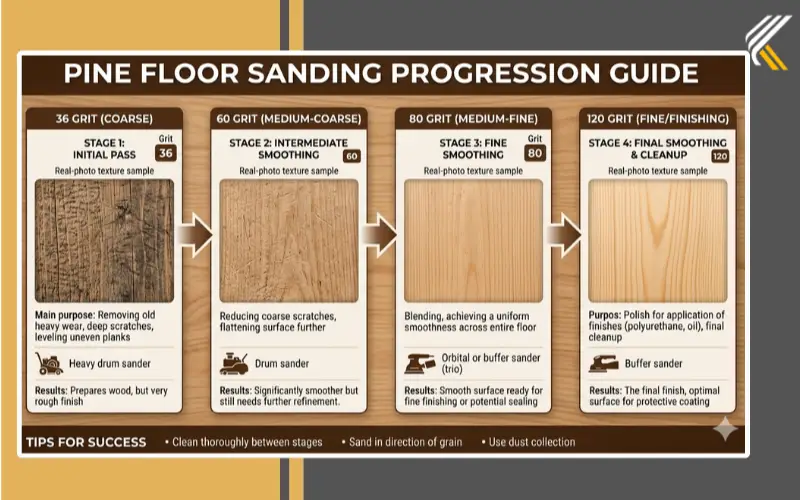
Most DIY projects use a drum sander for large areas and an orbital sander for edges and corners. Sand the floor in multiple passes, gradually moving to finer grits.
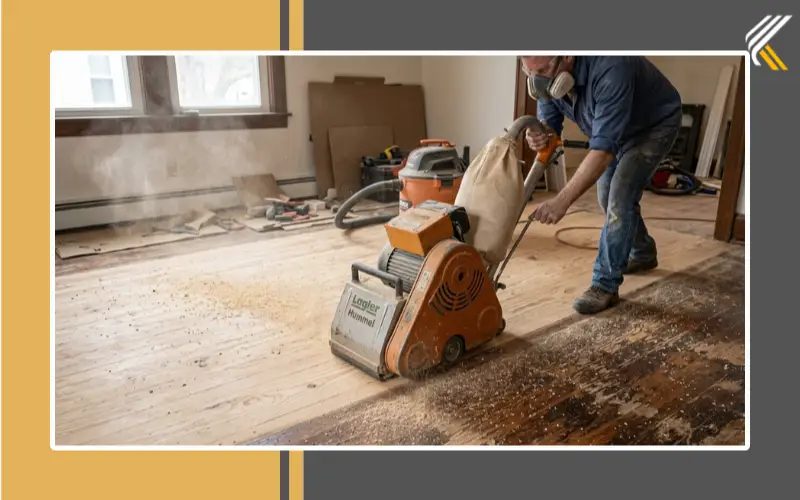
After sanding, remove all dust using a vacuum and a tack cloth. Dust left behind can affect the final finish. If you want a broader overview of the sanding, staining, and finishing process, see our guide on refinishing hardwood surfaces for additional techniques and preparation tips.
If you plan to stain the floor, test the stain first. Pine often absorbs stain unevenly, so many professionals recommend applying a wood conditioner before staining.
Finally, apply your chosen finish and allow adequate drying time between coats.
Best Sanding Grit Sequence for Pine Floors
Using the correct sanding sequence helps create a smooth finish while protecting the soft pine surface.
| Sanding Stage | Recommended Grit |
|---|---|
| First Pass | 36–40 Grit |
| Second Pass | 60 Grit |
| Third Pass | 80 Grit |
| Final Pass | 100–120 Grit |
Always remove dust between sanding stages for the best results.
Should You Stain Pine Floors?
Staining pine floors is optional. Some homeowners prefer the natural appearance of pine because it highlights the wood grain and knots.
Others choose stain to create a darker or more uniform color. If staining, test the product first and use a wood conditioner to improve consistency.
How to Prevent Blotchy Stain on Pine Floors
One of the biggest challenges when refinishing pine floors is blotchy staining.
Pine contains areas with different grain densities and resin pockets. These areas absorb stain at different rates.
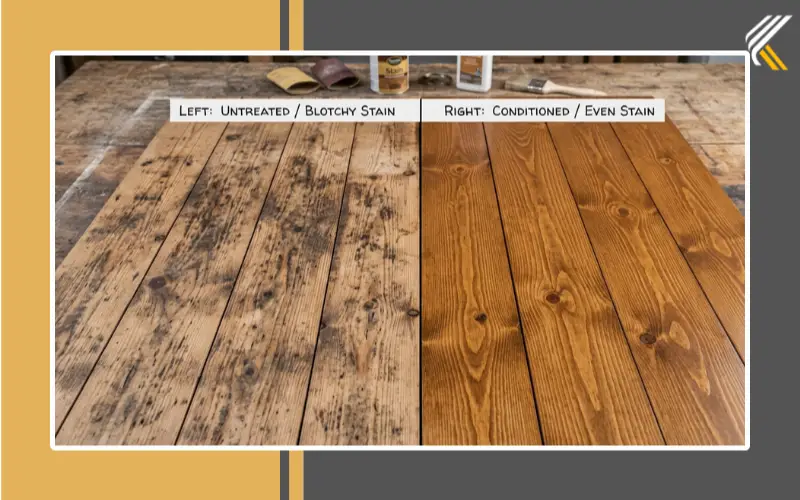
To reduce blotchiness:
-
- Use a pre-stain wood conditioner.
-
- Test stain colors before application.
-
- Sand evenly using the proper grit sequence.
-
- Consider gel stains for more consistent results.
These simple steps can improve the final appearance significantly.
Recoat vs. Refinish: What’s the Difference?
Not every floor needs complete refinishing.
A recoat adds a fresh protective layer over an existing finish. This works best when the finish is dull but the wood underneath remains protected.
Refinishing is necessary when:
-
- Deep scratches expose bare wood.
-
- Stains have penetrated the wood.
-
- The finish is peeling or failing.
-
- Significant discoloration is present.
Knowing the difference can save time and money.
Best Finish for Pine Floors
The right finish depends on your goals.
Water-based polyurethane dries quickly and keeps the wood looking lighter. Oil-based polyurethane creates a warmer color and offers excellent durability. Hardwax oil provides a natural appearance and is easier to spot repair.
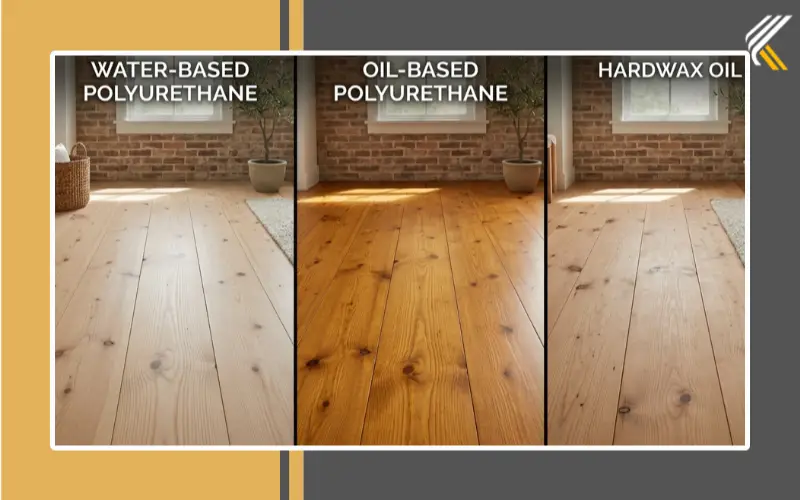
For most busy households, polyurethane remains the most durable option. If you’re planning a kitchen renovation, it’s worth exploring the best hardwood choices for kitchens to understand which wood species handle moisture and foot traffic most effectively.
Common Mistakes to Avoid
Many refinishing problems are caused by simple mistakes.
Common mistakes include:
-
- Over-sanding soft pine
-
- Skipping wood conditioner
-
- Using the wrong grit sequence
-
- Leaving sanding dust behind
-
- Applying finish too heavily
-
- Walking on floors before the finish cures
Avoiding these issues can improve both appearance and durability.
How Much Does Pine Floor Refinishing Cost?

Costs vary based on floor condition, project size, and location. For a detailed breakdown of installation, replacement, and restoration expenses, review our complete hardwood flooring cost breakdown before budgeting your project.
| Project Type | Typical Cost |
|---|---|
| DIY Refinishing | $1–$3 per sq. ft. |
| Professional Refinishing | $3–$8 per sq. ft. |
| Historic Floor Restoration | $5–$12 per sq. ft. |
DIY refinishing can save money, but professional services may be worthwhile for heavily damaged or historic floors.
How to Maintain Pine Floors After Refinishing

Proper maintenance helps extend the life of your refinished floor.
-
- Use felt pads under furniture.
-
- Clean spills immediately.
-
- Sweep or vacuum regularly.
-
- Avoid excessive water.
-
- Use cleaners designed for wood floors.
-
- Avoid dragging heavy furniture across the surface.
These habits help protect the finish and reduce future wear. Following proven hardwood floor care practices can help extend the life of your refinished pine floors and reduce long-term wear.
Frequently Asked Questions
How many times can pine floors be refinished?
Most solid pine floors can be refinished multiple times, depending on board thickness and previous sanding.
Can you refinish pine floors without sanding?
In some cases, a recoat is possible without full sanding. Floors with exposed wood usually require complete refinishing.
What is the best finish for pine floors?
Water-based polyurethane, oil-based polyurethane, and hardwax oil are among the most popular options.
Do pine floors need wood conditioner before staining?
Many professionals recommend it because pine absorbs stain unevenly and can become blotchy without proper preparation.
How long does it take to refinish pine floors?
Most projects take several days, depending on drying times, room size, and the number of finish coats.
Key Takeaways
- Most pine floors can be refinished multiple times if enough wood thickness remains.
- Pine is softer than hardwoods and requires extra care during sanding and staining.
- Using a wood conditioner can help prevent blotchy stain results.
- Following the correct sanding grit sequence improves finish quality.
- Refinishing is often more affordable than replacing pine flooring.
- Proper maintenance helps refinished floors last for many years.
Final Thoughts
Refinishing pine floors is one of the most cost-effective ways to improve the appearance and longevity of your flooring. With proper preparation, careful sanding, and the right finish, most pine floors can be restored and protected for years to come.
Based on industry best practices and real-world restoration projects, the best results come from understanding pine’s unique characteristics and taking the time to do each step correctly. Homeowners planning a larger renovation can also explore our complete kitchen flooring guide to compare pine with other popular flooring materials used throughout the home. Whether you choose a DIY approach or hire a professional, refinishing can help preserve the natural beauty and character of your pine floors.
About Kitchenoro
Kitchenoro is your trusted partner for complete kitchen remodeling, renovation, and elegant design. We specialize in premium cabinet installation, countertops, and transforming kitchens into luxurious, functional spaces. With expert craftsmanship and tailored solutions, Kitchenoro turns your vision into reality. Contact us to elevate your kitchen’s style and functionality!