
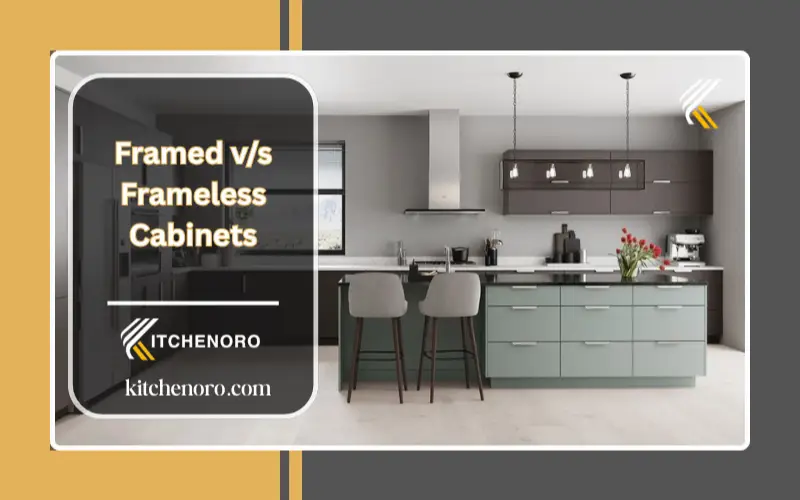
Americans spend more than 400 hours a year in the kitchen, which means cabinetry isn’t just storage—it directly shapes how your home feels, functions, and ages over time. What was once an outdated space can quickly become a refined, modern centerpiece with the right cabinet construction.
From decades of hands-on remodeling work and real-world cabinet installations across residential projects, I’ve worked extensively with both framed and frameless cabinets. Each style offers distinct benefits, limitations, and design outcomes—making the decision less about which is “better” and more about which best suits your space, lifestyle, and priorities.
Framed or Frameless Cabinets: Which Design Suits You? – Quick Answer:
Framed cabinets are ideal if you value durability, flexibility, and classic design, while frameless cabinets are best for modern kitchens that prioritize maximum storage, full access, and a sleek, minimalist look. The right choice depends on your aesthetic preference, budget, and installation precision.
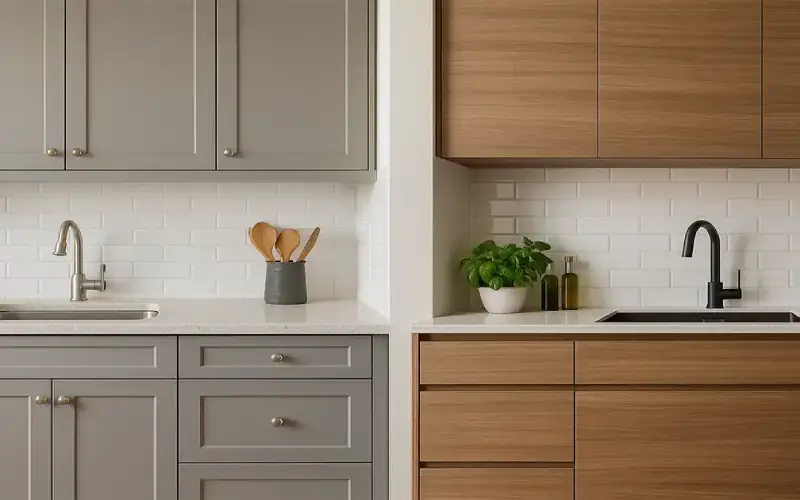
Ultra-Fast Takeaway:
Framed cabinets suit traditional homes and uneven walls, while frameless cabinets maximize storage and deliver a sleek, modern look—choose based on style, space, and installation precision.
Key Takeaways (30-Second Read)
-
Framed cabinets offer strength, easier installation, and classic versatility
-
Frameless cabinets maximize storage and deliver a modern, European aesthetic
-
Framed cabinets are more forgiving in older homes with uneven walls
-
Frameless cabinets require precise installation and periodic hinge adjustments
-
Both styles can last decades when built with quality materials
Why This Comparison Matters
Choosing between framed and frameless cabinets affects more than appearance. Cabinet construction directly impacts installation difficulty, usable storage space, long-term durability, maintenance needs, and overall kitchen performance.
Framed cabinets prioritize strength and flexibility, while frameless cabinets focus on space efficiency and modern aesthetics. Understanding these differences helps homeowners avoid costly mistakes and long-term frustration.
Framed Cabinets
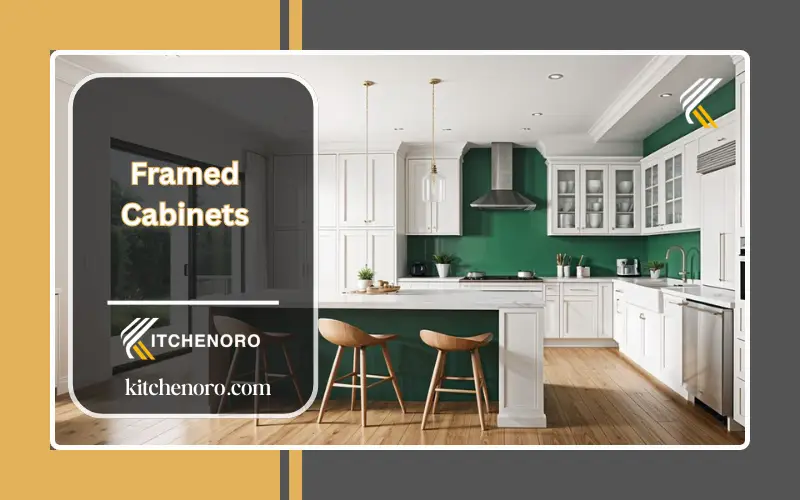
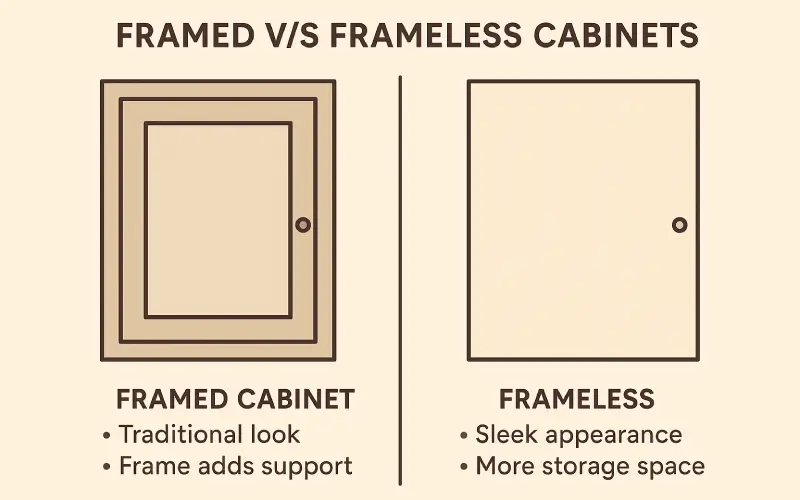
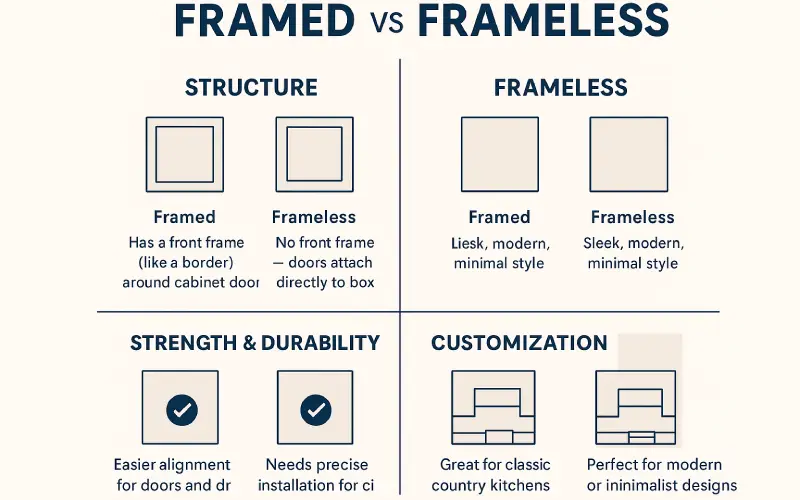
Framed cabinets feature a solid wood face frame attached to the front of the cabinet box, similar to a picture frame. This traditional construction method adds rigidity and structural reinforcement, making it a long-standing favorite in American kitchens.
They work exceptionally well in classic, transitional, farmhouse, rustic, and even industrial designs, making framed cabinets one of the most versatile options available.
Benefits of Framed Cabinets
-
Added structural stability and durability
-
Reduced racking helps keep doors and drawers aligned
-
Greater flexibility for size adjustments and modifications
-
Easier, more forgiving installation—especially in older homes
Drawbacks of Framed Cabinets
-
Slightly reduced interior storage space
-
Exposed cabinet sides often require skin panels for a finished look
Frameless Cabinets
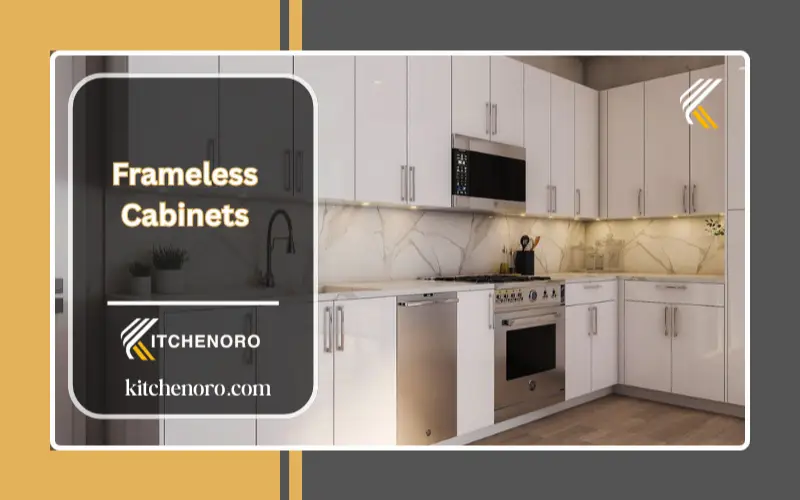
Frameless cabinets—often referred to as European-style cabinets—eliminate the face frame entirely. Doors and drawers mount directly to the cabinet box, creating a clean, uninterrupted appearance.
This design maximizes usable interior space and provides full access to shelves and drawers, making it especially appealing for smaller kitchens or minimalist layouts.
Benefits of Frameless Cabinets
-
Larger drawers and increased storage capacity
-
Full-access interiors with no center stile
-
Factory-finished sides for a seamless look
-
Clean, modern, minimalist aesthetic
Drawbacks of Frameless Cabinets
-
Limited flexibility for on-site size modifications
-
Requires precise measurements and skilled installation
-
Poorly constructed units may be more prone to racking during shipping
Framed v/s Frameless Cabinets: At-a-Glance Comparison
| Aspect | Frameless Cabinets | Framed Cabinets |
|---|---|---|
| Front Design | No face frame | Visible face frame |
| Style | Modern, minimalist | Classic, transitional |
| Interior Space | Maximum | Slightly reduced |
| Installation Time | 5+ days | 2–3 days |
| Installation Difficulty | Higher | Easier |
| Customization | Limited | Highly flexible |
| Maintenance | Seasonal hinge adjustment | Minimal |
| Cost Range | $25,000–$30,000 | $22,000–$28,000 |
Construction Differences in Practice
Materials & Structure
Framed cabinets rely on solid wood frames paired with plywood boxes for rigidity. Frameless cabinets depend on thicker side panels, high-quality fasteners, and precise engineering to achieve comparable strength.
Installation
Framed cabinets allow for adjustments during installation, making them ideal for uneven walls or floors. Frameless cabinets demand exact measurements and skilled installers to avoid alignment issues.
Style & Function
Framed cabinets emphasize craftsmanship, detail, and traditional character. Frameless cabinets prioritize clean lines, efficiency, and contemporary design.
Strength & Everyday Performance
Framed cabinets are widely known for long-term sturdiness and resistance to warping. Frameless cabinets can be equally durable when built with high-quality materials, but their performance depends heavily on construction accuracy and installation precision.
Cost Considerations
From real-world remodeling experience in a medium-sized kitchen (approximately 14’ × 16’):
-
Framed cabinets often cost less overall due to easier installation and flexibility
-
Frameless cabinets may cost more because of precision manufacturing and longer installation time
-
Both options can range from budget-friendly to premium, depending on materials and finishes
Care and Maintenance
Frameless cabinets typically require hinge adjustments once or twice a year, especially in humid environments. Framed cabinets generally need minimal maintenance beyond routine cleaning, thanks to their added structural reinforcement.
FAQs
1) Are Frameless Cabinets More Expensive?
Often yes, due to precision engineering and higher installation demands.
2) What are the disadvantages of frameless doors?
-
- Frameless glass doors add light and a modern feel, but reduce privacy
-
- Require regular cleaning to maintain a pristine appearance
-
- Carry potential risk of damage
3) Are Frameless Cabinets Less Sturdy?
They can be just as durable when built and installed correctly, but framed cabinets naturally provide more structural reinforcement.
4) Which Type of Kitchen Cabinet is Best?
The best option depends on your kitchen style, material quality, and installation expertise—not just the cabinet design itself.
Conclusion
Framed and frameless cabinets each bring unique strengths to a kitchen remodel. Framed cabinets excel in durability, flexibility, and ease of installation, making them ideal for traditional and transitional designs. Frameless cabinets shine in modern kitchens where storage efficiency and seamless aesthetics matter most. The right choice ultimately depends on your space, design goals, and long-term priorities.
About Kitchenoro
Kitchenoro is your trusted partner for complete kitchen remodeling, renovation, and elegant design. We specialize in premium cabinet installation, countertops, and transforming kitchens into luxurious, functional spaces. With expert craftsmanship and tailored solutions, Kitchenoro turns your vision into reality. Contact us to elevate your kitchen’s style and functionality!