
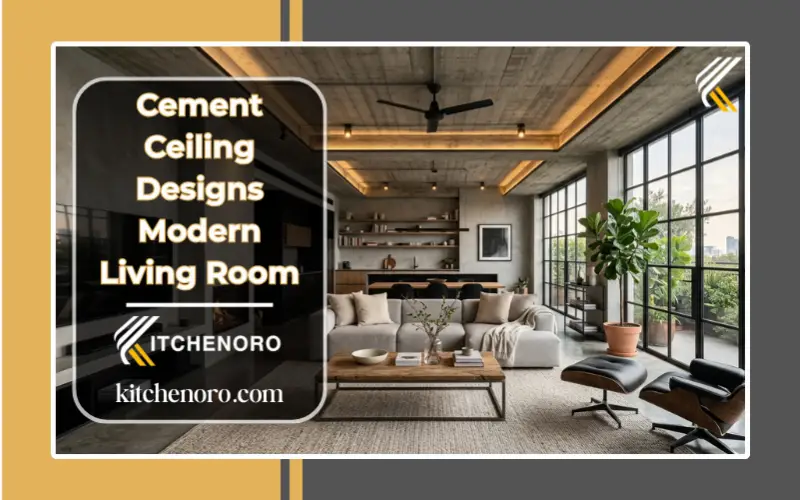
Cement (concrete) ceiling designs are becoming very popular in modern homes, but many homeowners feel confused before choosing them. Common concerns include whether the ceiling will look too cold, if cracks will appear over time, how much it will cost, and whether it will make the room feel dark or echo. These are real problems that people face during renovation or construction, especially when they compare concrete ceilings with gypsum or POP options.
From real renovation experiences and contractor feedback, one thing becomes clear: many homeowners regret choosing ceilings based only on appearance. Some face issues like sagging panels, frequent repairs, or poor durability with other materials. In several projects, homeowners later switched to concrete ceilings for better strength and long-term value. This guide is designed to help you avoid those mistakes by giving you practical insights, not just design ideas, so you can make a confident and informed decision.
Cement Ceiling Designs- Quick Summary:
Cement (concrete) ceiling designs offer a strong, modern, and low-maintenance option for today’s homes. They come in styles like exposed, polished, and textured finishes, with costs in the USA ranging from $5 to $25+ per sq ft. While they are durable and long-lasting, proper installation, lighting, and insulation are important to avoid issues like cracks or a cold appearance. With the right planning, cement ceilings can deliver both style and long-term value.
 Key Takeaways
- Cement (concrete) ceilings are durable and low maintenance
- Best for modern and industrial home styles
- Cost ranges from $5 to $25+ per sq ft in the USA
- Proper curing and installation help prevent cracks
- Warm lighting balances the cold look of concrete
- Not ideal if you want frequent design changes
 What Is a Cement Ceiling?
A cement ceiling, also called a concrete ceiling, is made using a mix of cement, sand, and aggregates. It can be left raw or finished in different styles.
These ceilings are strong, fire-resistant, and require low maintenance.
 According to the American Concrete Institute, properly designed concrete structures can last for decades with minimal maintenance.
Many homeowners choose concrete ceilings because they last for years and require fewer repairs compared to false ceilings.
 Why Cement Ceiling Designs Are Popular
Cement ceilings are popular because they offer both visual appeal and long-term value.
Key reasons:
-
- clean and minimal look
-
- long lifespan
-
- fire resistance
-
- fits modern and industrial styles
Interior designers often recommend concrete ceilings for open-plan homes because they create a seamless and uncluttered look.
Unlike gypsum or POP ceilings, concrete ceilings do not sag or require frequent repairs.
 Types of Cement Ceiling Designs
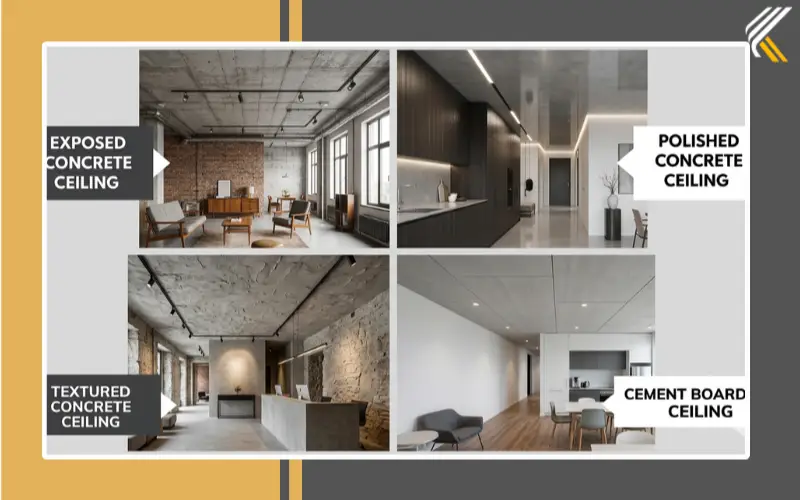
Exposed Cement Ceiling
Raw concrete creates a natural and industrial look. It is widely used in loft-style homes.
Textured Cement Ceiling
Patterns and rough finishes add depth and visual interest.
Polished Cement Ceiling
A smooth surface reflects light and creates a premium modern feel.
Many homeowners who choose polished concrete ceilings mention that it helps brighten darker rooms by reflecting natural light.
Cement Board Ceiling
Uses ready-made boards for faster installation and flexible design.
 Cement Ceiling Design Ideas
Industrial Cement Ceiling Design for Hall
Raw concrete creates a bold industrial look. It pairs well with metal fixtures and wooden furniture.

Polished Cement Ceiling for Modern Homes
A polished surface improves light reflection and makes rooms feel larger.
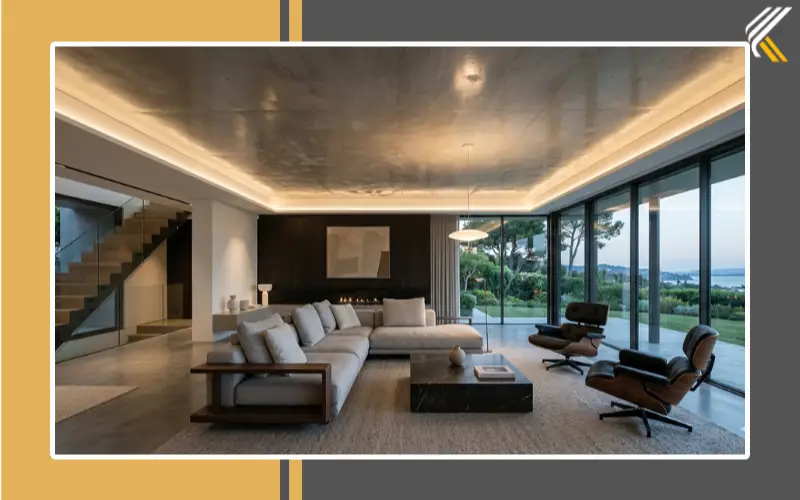
Textured Cement Ceiling Design
Textured finishes add character and break the monotony of flat ceilings.
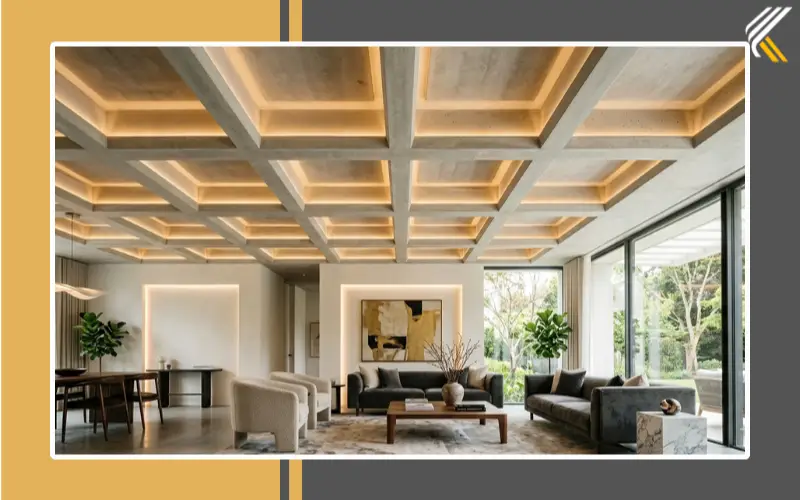
Coffered Cement Ceiling Design
Box patterns create depth and give a structured, high-end look.
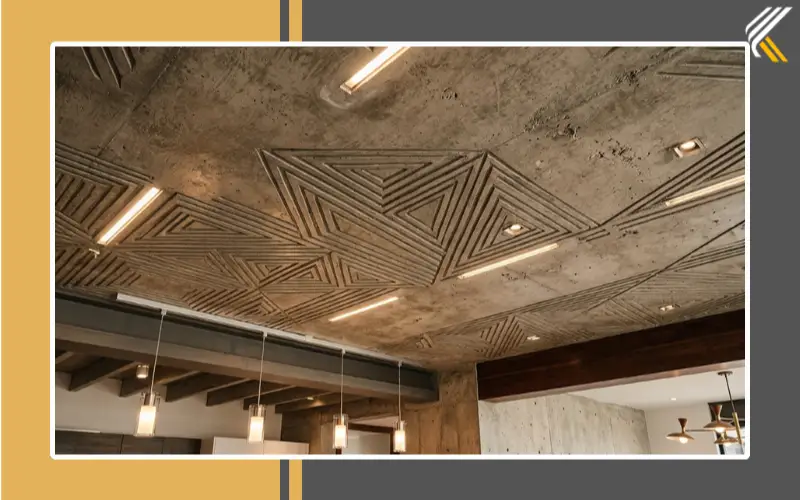
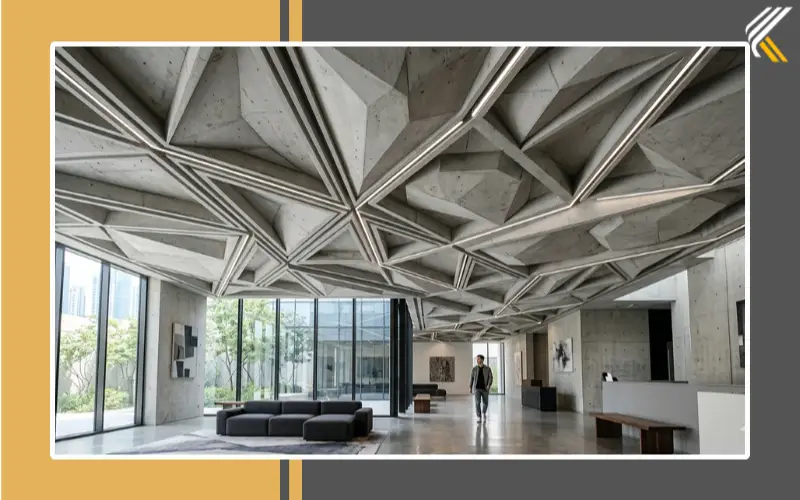
Geometric Cement Ceiling Patterns
Sharp lines and shapes create a modern and artistic ceiling design.
Cement Ceiling with Metal Accents
Combining steel or metal elements enhances the industrial style.
Decorative Cement Ceiling Designs
Floral and classic patterns suit traditional or luxury interiors.
 Cost of Cement Ceiling in the USA
The cost depends on finish, labor, and design complexity.
Average cost:
-
- basic concrete ceiling: $5 to $12 per sq ft
-
- polished concrete ceiling: $12 to $25 per sq ft
-
- decorative/custom designs: $25+ per sq ft
According to HomeAdvisor, concrete work costs can vary widely based on labor, finishing, and location in the U.S.
What affects cost:
-
- labor charges
-
- ceiling height
-
- finishing type
-
- design complexity
Homeowners often report that while the upfront cost is higher, they save money over time because there is little need for repairs or replacement.
| Cost Factor | Impact on Price |
|---|---|
| Basic finish | Low |
| Polished finish | Medium |
| Decorative design | High |
| Labor complexity | High |
| Ceiling height | Medium |
 Pro Tip: If your room has low natural light, choose a polished or light grey concrete ceiling instead of a dark finish to keep the space bright and open.
 Cement Ceiling vs False Ceiling vs Gypsum
Cement ceilings are best for durability, while gypsum and POP ceilings offer more design flexibility.
-
- Cement ceilings last longer and require less maintenance
-
- Gypsum ceilings are easier and faster to install
-
- POP ceilings are more budget-friendly but less durable
If you want long-term strength, cement is a better choice.
 How Cement Ceilings Are Made (Installation Process)
Step 1: Formwork setup
A structure is prepared to hold the concrete.
Step 2: Reinforcement
Steel bars are added to increase strength.
Step 3: Concrete pouring
Concrete is poured evenly into the mold.
Step 4: Curing
The surface is kept moist for several days to prevent shrinkage cracks.
The Portland Cement Association highlights that proper curing is essential for strength and crack prevention.
Step 5: Finishing
The ceiling is polished, textured, or coated.
Contractors often say that poor curing is the main reason for early cracks in concrete ceilings.
Best Lighting for Cement Ceilings
Lighting improves both appearance and comfort.
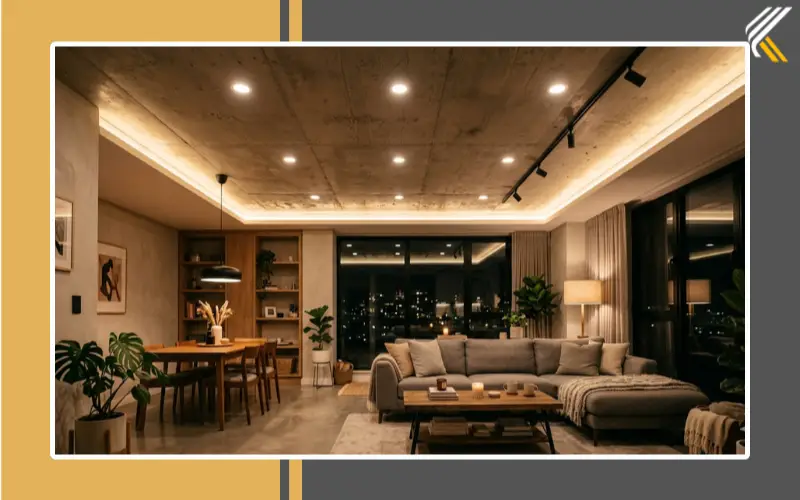
Best options:
-
- recessed lights for a clean look
-
- track lighting for industrial style
-
- pendant lights for statement design
-
- LED strips for modern effect
Warm lighting is commonly used in concrete ceiling homes to balance the grey tone and create a cozy feel.
Pro Tip: If your room has low natural light, choose a polished or light grey concrete ceiling instead of a dark finish to keep the space bright and open.
 Common Problems with Cement Ceilings (and Solutions)
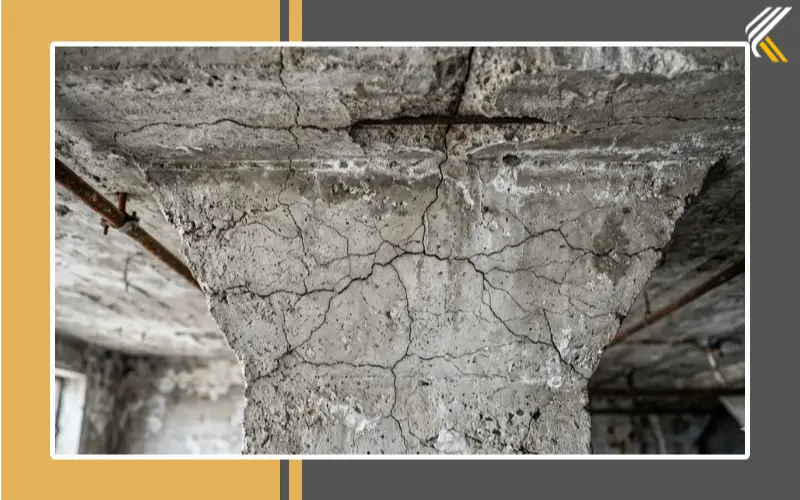
Cracks
Cause: shrinkage or structural movement
Solution: proper curing and expansion joints
Echo or sound issues
Cause: hard surface reflects sound
Solution: add rugs, curtains, or acoustic panels
Many homeowners notice echo in large rooms with concrete ceilings and fix it using soft furnishings.
Cold appearance
Cause: natural grey tone
Solution: use warm lighting and wood finishes
Stains or moisture
Cause: water exposure
Solution: apply sealant and waterproof coating
Pro Tip: If your room has low natural light, choose a polished or light grey concrete ceiling instead of a dark finish to keep the space bright and open.
 Maintenance and Cleaning Tips
-
- clean dust using a soft cloth or vacuum
-
- use mild cleaners for stains
-
- reseal every 2 to 5 years
-
- inspect for cracks regularly
Regular sealing is one of the most recommended steps by professionals to maintain the look of concrete ceilings.
 US-Specific Considerations
Concrete ceilings behave differently depending on climate.
-
- in warmer regions, concrete can retain heat
-
- insulation may be needed for better energy efficiency
-
- proper ventilation helps prevent moisture problems
The U.S. Department of Energy recommends proper insulation to improve energy efficiency in homes.
Common Mistakes to Avoid
-
- skipping proper curing, which leads to cracks
-
- not planning electrical wiring in advance
-
- using poor-quality finishing materials
-
- ignoring insulation needs
Many renovation mistakes happen due to poor planning rather than the material itself.
 Quick Checklist Before Installation
- ☐ Have you planned electrical wiring?
- ☐ Is proper curing included in the process?
- ☐ Have you considered insulation needs?
- ☐ Are you hiring experienced contractors?
 Is a Cement Ceiling Worth It?
A cement ceiling is a good choice if you want:
-
- long-term durability
-
- a modern or industrial style
-
- low maintenance
Homeowners who prefer low-maintenance homes often find concrete ceilings a practical long-term investment.
It may not be ideal if you want frequent design changes or a softer ceiling look.
| Situation | Is Cement Ceiling a Good Choice? |
|---|---|
| You want long-term durability |  Yes Yes |
| You prefer modern/industrial design | Yes |
| You need low maintenance | Yes |
| You want frequent design changes |  No No |
| You have a low budget | Depends |
Best Rooms for Cement Ceiling Designs
- Living Room: Ideal for exposed concrete and industrial designs
- Kitchen: Works well with modern lighting and clean finishes
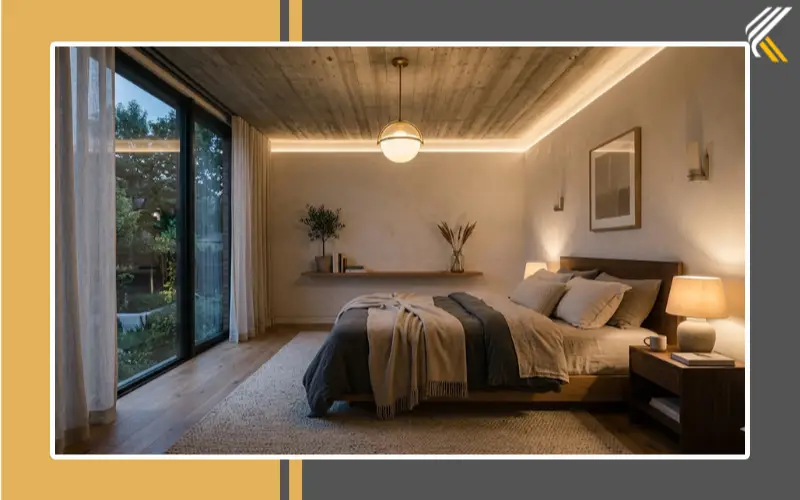
- Bedroom: Use warm lighting and soft decor to balance the look
 FAQs About Cement Ceiling Designs
Is a cement ceiling good for homes?
Yes, it is durable and long-lasting.
Does a cement ceiling crack?
Small cracks can occur due to shrinkage or structural movement, but proper curing reduces the risk.
Is it expensive?
Basic designs are affordable, but decorative finishes cost more.
 Final Thoughts
Cement ceiling designs are not just about style—they are a long-term decision that affects both the look and performance of your home. Based on real-world usage and homeowner feedback, concrete ceilings work best when chosen for durability, low maintenance, and modern appeal. However, when selected only for aesthetics without proper planning, they can lead to issues like echo, cold appearance, or poor lighting results.
That is why expert guidance and correct execution are important. Organizations like the American Concrete Institute emphasize that proper design, curing, and finishing are key to achieving strong and long-lasting concrete structures. If you plan carefully, consider lighting and insulation, and work with skilled professionals, a cement ceiling can deliver both function and style for decades. The best approach is to focus on long-term value rather than short-term trends.
About Kitchenoro
Kitchenoro is your trusted partner for complete kitchen remodeling, renovation, and elegant design. We specialize in premium cabinet installation, countertops, and transforming kitchens into luxurious, functional spaces. With expert craftsmanship and tailored solutions, Kitchenoro turns your vision into reality. Contact us to elevate your kitchen’s style and functionality!