
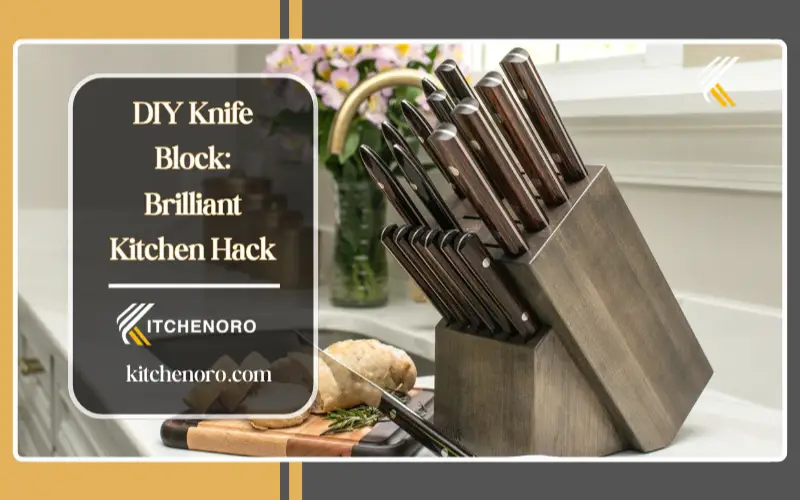
A DIY knife block is one of the smartest kitchen storage upgrades you can build at home. It keeps knives organized, protects blade edges, and adds a custom design touch to your countertop — all for up to 70% less than premium store-bought blocks.
This project is part of our complete Kitchen DIY Projects guide, where we share step-by-step tutorials for building practical kitchen upgrades using affordable materials.
This custom knife block design was tested with a 10-knife set over six months of daily kitchen use to confirm slot spacing, depth, and stability under real conditions.
Small upgrades like knife storage can be part of a larger DIY kitchen remodel that improves both organization and design.
Builder’s Note:
“On my first knife block build, I cut every slot too tight because I was afraid of wobble. After two weeks of use, moisture made the wood swell and half the knives wouldn’t fit. On the second build, I widened each slot by just 0.5 mm—and six months later, every blade still slides in smoothly without rattling.”
In this guide, you’ll learn how to build a custom wooden knife holder using scrap hardwood, basic woodworking tools, and precisely angled slots sized to your knife set. With careful layout and simple joinery, this project is approachable for confident beginners and delivers professional results in one afternoon.
Before choosing tools or wood, it’s important to understand why a homemade knife block often outperforms factory versions.
DIY Knife Block: Brilliant Kitchen Hack- Quick Answer:
A DIY knife block can be built by repurposing wood scraps like white oak or hickory, shaping precise slots for different knives, and assembling with careful gluing, dowels, and angled cuts for strength. Adding features like a decorative arch, steel plate for stability, and smooth side panels creates both durability and style. With thoughtful sanding, finishing, and protective coatings, the result is a functional, elegant, and personalized kitchen accessory that’s as sturdy as it is beautiful.
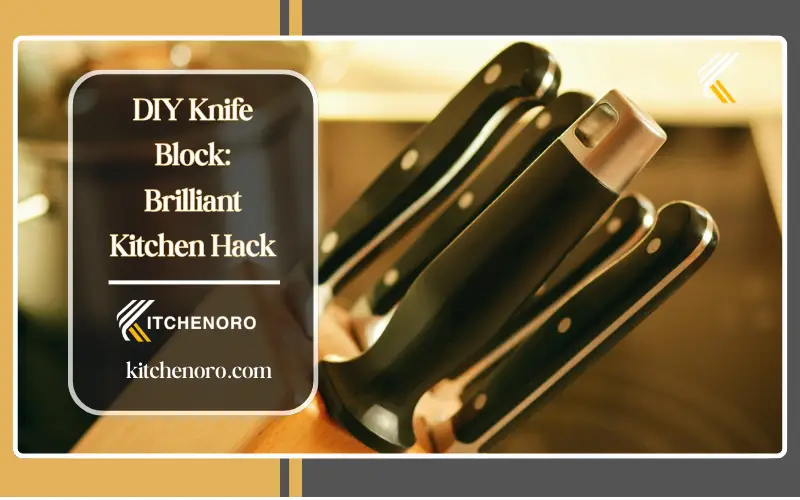
Woodworking process showing precise slot cutting for a DIY knife block using a router and hardwood block, ensuring accurate spacing and safe storage for different knife types.
Who This Project Is For
This DIY wooden knife block is ideal for:
- Home cooks with a full knife set
- Woodworking hobbyists with basic power tools
- Anyone wanting custom knife storage without paying premium prices
Not recommended for:
- Very small kitchens with limited counter space
- Beginners without saw or router experience
Project Overview
Skill level: Intermediate
Build time: 3–5 hours
Estimated cost: $15–$40
Finished size: approx. 280 mm × 230 mm × 160 mm (11″ × 9″ × 6″)
Best wood types: Maple, walnut, beech, cherry, hickory
Finish system: Food-safe oil → fully cured water-based topcoat
Why Build Your Own Knife Block?
A homemade knife block allows you to control slot spacing, depth, and angle based on your exact knives. Store-bought blocks often use soft woods and fixed layouts that don’t match real blade profiles.
Benefits of DIY
- Custom-fit slots
- Strong hardwood construction
- Deeper slots for improved safety
- More hygienic than cheap factory blocks
- Decorative, handcrafted appearance
For larger kitchen storage upgrades, you can also build DIY pantry shelves to organize dry goods and cooking supplies efficiently.
Safety & Hygiene Notes
Always wear eye protection when routing or cutting slots. Clamp wood securely and keep your hands clear of blades and bits.
Hygiene Rules
- Insert only fully dry knives
- Moisture trapped in slots encourages mold and bacteria
- Clean slots monthly using a thin brush or compressed air
- Reapply food-safe oil once or twice per year
Deep Cleaning (Every 2–3 Months)
Flush slots with mild vinegar solution, allow to dry for 24 hours, then lightly re-oil.
Never soak, dishwasher-clean, or bleach a knife block.
Tools and Materials
Tools
- Digital or bevel angle gauge
- Palm router or table saw (kerf method)
- Flush-trim template bit
- 1/8″ downcut bit
- Jigsaw or bandsaw
- Sandpaper (80–220 grit)
- Clamps
- Drill
Materials
- Scrap hardwood
- Wood glue
- Steel plate (for weighted base)
- Mineral oil or beeswax finish
- Water-based satin topcoat
- Rubber feet
Estimated Cost Breakdown
| Item | Cost |
|---|---|
| Hardwood scraps | $0–$15 |
| Glue & consumables | $5 |
| Finish products | $5–$10 |
| Steel plate & feet | $5–$10 |
| Total | $15–$40 |
If you’re planning bigger upgrades, understanding DIY kitchen cabinets cost can help you budget your kitchen improvement projects more effectively.
Knife Slot Size Guide
| Knife Type | Slot Width | Slot Depth |
|---|---|---|
| Chef knife | 3 mm | 110 mm |
| Santoku | 3 mm | 105 mm |
| Utility | 2.5 mm | 90 mm |
| Paring | 2 mm | 70 mm |
Tip: Sketch your slot layout on cardboard before cutting wood.
Wood Selection Tips
Choose closed-grain hardwoods such as maple, walnut, or beech. These resist moisture absorption and don’t trap food particles like open-pore woods (oak or ash).
Avoid pine and softwoods — they dent easily and hold moisture.
Orient grain vertically for cleaner slot edges and strength.
The same hardwood boards used for this knife block can also work well for DIY closet shelves, another simple woodworking project for improving home storage.
Step-by-Step Instructions
Step 1: Prepare the Block Core
- Rip hardwood scraps into 25 mm strips.
- Glue into a panel and clamp flat.
- Crosscut to length and square ends.
Alternate grain direction when gluing to reduce warping.
Step 2: Slot Layout & Cutting (tightened)
- Trace each knife blade on paper.
- Transfer centerlines to the block.
- Mark depth stops for each slot.
- Cut grooves between 2 mm and 3.2 mm wide.
- Check fit often — slots should grip lightly without binding.
- Use featherboards and stop blocks for safety and consistency.
Test one slot on scrap before committing to the block.
Step 3: Initial Assembly
- Drill alignment holes and insert toothpick dowels.
- Cut shallow glue grooves near slots.
- Glue and clamp flat.
- Plane or sand flush after curing.
Step 4: Base Angle & Shape
- Bandsaw a 25° forward angle with a 2.5° rear drop.
- Cut honing steel dado if desired.
Forward tilt prevents tipping and improves balance.
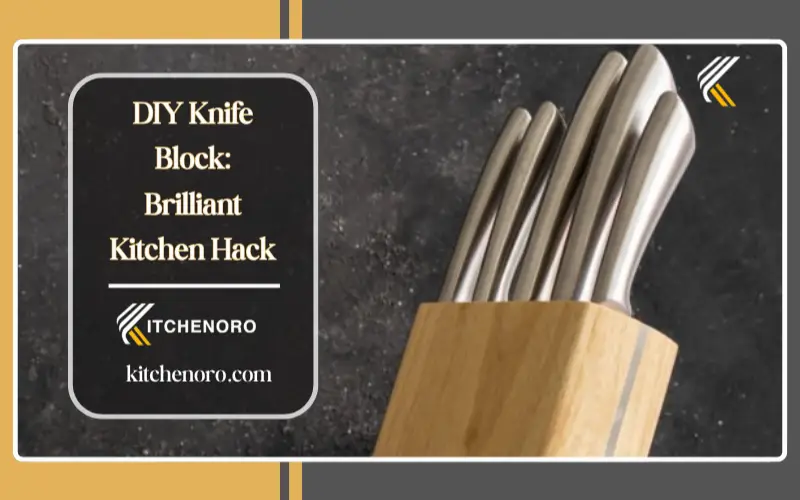
A finished DIY knife block keeps kitchen knives organized while adding a handcrafted design element.
Step 5: Side Panels
- Dry-fit miters (45°, 39°, or 47.5°).
- Tape and glue for clean joints.
Step 6: Decorative Arch & Weighted Base
- Inset the steel plate in the bottom.
- Shape arch with sanding drum.
- Ensure base sits perfectly flat.
Added weight prevents tip-over with long knives.
To complement handcrafted accessories like a knife block, you can explore DIY pastel colors in kitchen decor for a softer and more personalized kitchen style.
Step 7: Sanding & Finishing (tightened)
- Sand from 80 → 220 grit.
- Clean slots with thin sandpaper strips.
- Remove dust using toothbrush or air.
Finish Sequence:
-
Apply mineral oil or beeswax
-
Let cure fully
-
Apply water-based satin topcoat
-
Cure completely
-
Attach rubber feet
Never rush curing—odors transfer to knife handles.
Common Mistakes
- Slots too tight
- Polyurethane alone
- Wet knives
- Skipping alignment
- Softwood lumber
Pros & Cons
Pros
- Custom fit
- Cheaper
- Decorative
- Protects blades
- Durable
Cons
- Measuring required
- Needs cleaning
- Build time
FAQs
1-What can I use instead of a knife block?
When I wanted an easy and cost-effective option for my knives, I decided to invest in sayas and knife covers. Sometimes I even roll my cooking knives in soft materials and keep them in a drawer. The pros of using in-drawer knife storage are that it keeps the knives off the counter and also allows me to add extra safety blocks when I have small children at home.
2-Why don’t chefs use knife blocks?
Many chefs believe that while knife blocks are meant to protect each knife, the slots often become a hidden place for bacteria to grow. These areas are almost impossible to clean, and over time they can infect your knives, making the idea of storing them this way less safe than it seems. From my own cooking routine, I noticed that although the block looks tidy, it doesn’t really keep the tools as hygienic as one would expect.
3-What is the best material for a knife block?
When I built my own Diy Knife Block, I realized that wooden blocks are the most popular choices because they not only protect the blades but also absorb extra moisture, keeping the kitchen safe and stylish with nice decor. Using different woods like maple, bamboo, or walnut brings unique benefits, with varying levels of durability, while some even add antibacterial properties that make them great and long-lasting as well as looking elegant.
4-How dirty is a knife block?
When I first learned how much dirt a knife block Can Harbor, I was surprised because Even well-kept knives that look cleaned and sanitized still contribute to the problem. Inside the slots, residual moisture left behind after washing can help Bacteria, including Salmonella, E. coli, yeast, and mold, to grow if the blades are not dried completely before being slid back into their holders. I once thought my block was spotless, but it actually showed how painstakingly scrubbing alone does not prevent contamination—it only works when blades are kept truly dry.
If you’re upgrading your kitchen workspace, pairing your knife block with DIY epoxy countertops can create a modern and durable cooking area.
Trusted Resources for Knife Storage & Kitchen Safety
To better understand safe knife storage, food-safe finishes, and kitchen hygiene, you can review the following trusted resources from recognized authorities:
-
National Sanitation Foundation (NSF) – Their food equipment safety guidelines explain hygiene practices and safe materials for kitchen tools and storage systems.
https://www.nsf.org -
USDA Food Safety and Inspection Service (FSIS) – Provides official food safety guidance on preventing bacteria growth and maintaining hygienic kitchen tools and surfaces.
https://www.fsis.usda.gov -
Wood Database – A well-known woodworking reference explaining wood types, durability, and grain structure useful when selecting hardwood for kitchen accessories like knife blocks.
https://www.wood-database.com
Conclusion
Building a DIY knife block blends woodworking with everyday kitchen function. By shaping hardwood scraps into a custom design with angled slots and decorative details, you create storage that is both practical and beautiful.
With proper sanding, food-safe finishing, and routine cleaning, your knife block will protect your blades, organize your workspace, and serve as a handcrafted centerpiece for years.
Pair it with a matching cutting board or magnetic strip for a complete handmade kitchen storage system.
If you enjoy building functional kitchen upgrades like this knife block, explore our full Kitchen DIY Projects collection where we cover beginner to advanced kitchen builds.
Disclaimer
This project is for educational purposes only. Always follow tool safety instructions and use food-safe finishes for kitchen accessories.
About Kitchenoro
Kitchenoro is your trusted partner for complete kitchen remodeling, renovation, and elegant design. We specialize in premium cabinet installation, countertops, and transforming kitchens into luxurious, functional spaces. With expert craftsmanship and tailored solutions, Kitchenoro turns your vision into reality. Contact us to elevate your kitchen’s style and functionality!