
If you’re planning a kitchen remodel, choosing the right kitchen backsplash height can quickly become confusing. Many homeowners spend weeks comparing tile styles, countertop materials, and cabinet finishes, only to realize they are unsure how high the backsplash should go. Questions like Should the backsplash stop at the bottom of the cabinets?, Is a full-height backsplash worth the extra cost?, and Will a short backsplash make my kitchen look outdated? are common. These concerns are understandable because backsplash height affects more than just appearance—it influences wall protection, cleaning, visual balance, and the overall value and feel of your kitchen.
Over the years, we’ve reviewed countless kitchen remodels and design plans, and one pattern appears again and again: homeowners often focus heavily on choosing the perfect tile while giving very little attention to backsplash height. Yet in many finished kitchens, backsplash height is one of the first details people notice. We’ve seen homeowners spend thousands on premium countertops and cabinetry only to feel disappointed with the final look because the backsplash proportions felt off. The good news is that there is no one-size-fits-all answer. The best kitchen backsplash height depends on your layout, cabinet placement, cooking habits, design goals, and budget. In this guide, we’ll help you understand the options so you can choose a backsplash height that looks beautiful, functions well, and stands the test of time.
Kitchen Backsplash Height- Quick Answer:
The standard kitchen backsplash height is typically 18 inches, matching the space between the countertop and upper cabinets. However, full-height backsplashes extending to the ceiling are becoming increasingly popular in modern kitchens.
Key Takeaways
- Most kitchen backsplashes extend about 18 inches from the countertop to the bottom of the upper cabinets.
- Full-height backsplashes are one of the most popular kitchen design trends.
- Behind a stove, backsplashes often extend to the range hood or ceiling.
- The ideal backsplash height depends on your kitchen layout, cabinet design, and personal preferences.
- Full-height backsplashes offer better wall protection and a more custom appearance.
What Is the Standard Kitchen Backsplash Height?
There is no official standard kitchen backsplash height.
In most kitchens, the backsplash extends from the countertop to the bottom of the upper cabinets.
Since upper cabinets are commonly installed about 18 inches above the countertop, many homeowners end up with an 18-inch backsplash.
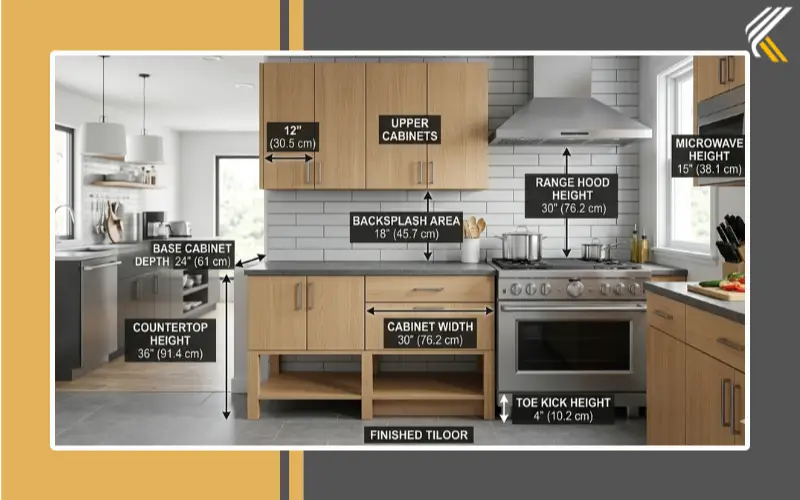
According to the National Kitchen and Bath Association (NKBA), kitchen planning guidelines often use approximately 18 inches of clearance between countertops and upper cabinets, although custom kitchen layouts may vary.
Standard Kitchen Measurements
| Feature | Typical Measurement |
|---|---|
| Countertop Height | 36 Inches |
| Distance Between Countertop and Upper Cabinets | 18 Inches |
| Common Backsplash Height | 18 Inches |
| Traditional Short Backsplash | 4 Inches |
Keep in mind that custom kitchens often use different measurements. Cabinet placement, appliance sizes, and personal preferences can all influence backsplash height.
Why Kitchen Backsplash Height Matters
Many people think of a backsplash as a decorative element. In reality, backsplash height affects both the appearance and functionality of your kitchen.
The right backsplash height can:
-
- Protect walls from grease and moisture
-
- Reduce cleaning and maintenance
-
- Improve visual balance
-
- Create a more custom appearance
-
- Complement cabinetry and countertops
-
- Enhance the overall kitchen design
Good backsplash planning also supports long-term kitchen functionality. The National Association of Home Builders (NAHB) regularly highlights kitchen design features that contribute to homeowner satisfaction and everyday usability.
Our Experience
During kitchen renovation projects, we have noticed that many homeowners initially focus on tile color and patterns. However, once different backsplash heights are compared side by side, the height often has a bigger impact on the overall appearance than the tile itself.
In several projects, simply extending the backsplash to the bottom of the upper cabinets made the kitchen look more finished without changing the tile material.
A backsplash that is too short may leave walls exposed. A backsplash that feels out of proportion can make a kitchen look unfinished.
Choosing the correct height helps create a kitchen that is both beautiful and functional.
Standard Backsplash vs Full-Height Backsplash
One of the most important decisions during a kitchen remodel is choosing between a standard backsplash and a full-height backsplash.
Both options offer unique advantages.
Standard Backsplash
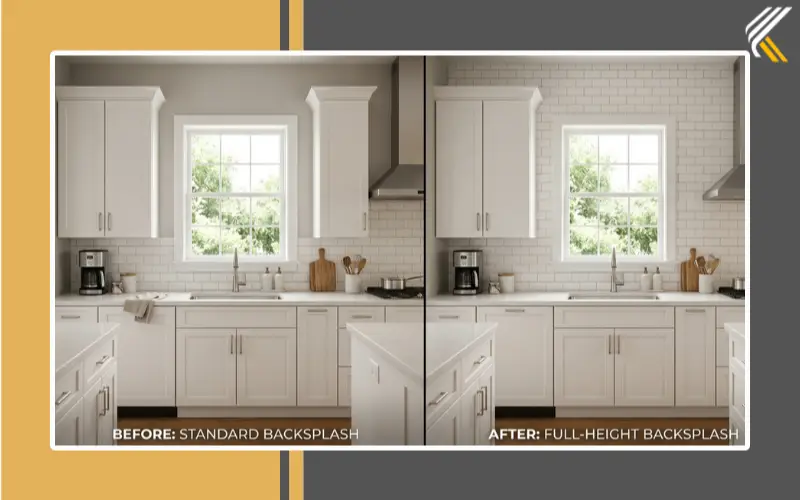
A standard backsplash typically extends from the countertop to the bottom of the upper cabinets.
In some kitchens, especially older homes, homeowners may use a short 4-inch backsplash made from the same material as the countertop.
Benefits include:
-
- Lower material costs
-
- Easier installation
-
- Traditional appearance
-
- Budget-friendly remodeling
-
- Simple maintenance
This option remains common in traditional and transitional kitchens.
Full-Height Backsplash
A full-height backsplash extends farther up the wall.
Depending on the design, it may:
-
- Reach the bottom of upper cabinets
-
- Extend behind the range hood
-
- Continue all the way to the ceiling
Benefits include:
-
- Better wall protection
-
- Easier cleaning
-
- Strong visual impact
-
- Modern appearance
-
- Higher-end design appeal
What We Have Seen in Real Remodels
Homeowners who choose a standard backsplash usually prioritize budget and simplicity.
In contrast, homeowners investing in a complete kitchen remodel often prefer a full-height backsplash because it creates a custom look that visually connects the countertop, backsplash, and range hood into one cohesive design.
Comparison Table
| Feature | Standard Backsplash | Full-Height Backsplash |
|---|---|---|
| Cost | Lower | Higher |
| Material Usage | Less | More |
| Maintenance | Good | Excellent |
| Wall Protection | Basic | Maximum |
| Visual Impact | Moderate | Strong |
| Modern Appeal | Moderate | High |
Today, full-height backsplashes are one of the most requested features in modern kitchen renovations.
Kitchen Backsplash Height at a Glance
| If You Have… | Recommended Height |
|---|---|
| Traditional Kitchen | To Bottom of Upper Cabinets |
| Modern Kitchen | Full Height |
| Kitchen Without Upper Cabinets | Full Height or Ceiling Height |
| Budget Remodel | Standard Height |
| Luxury Remodel | Full-Height Stone Slab |
| Decorative Range Hood | Extend to Hood or Ceiling |
How High Should a Backsplash Be Behind a Stove?
The wall behind a stove receives more grease, heat, and food splatter than any other area in the kitchen.
Because of this, many designers recommend extending the backsplash higher in this section.
Option 1: To the Bottom of the Range Hood
This is one of the most common solutions.
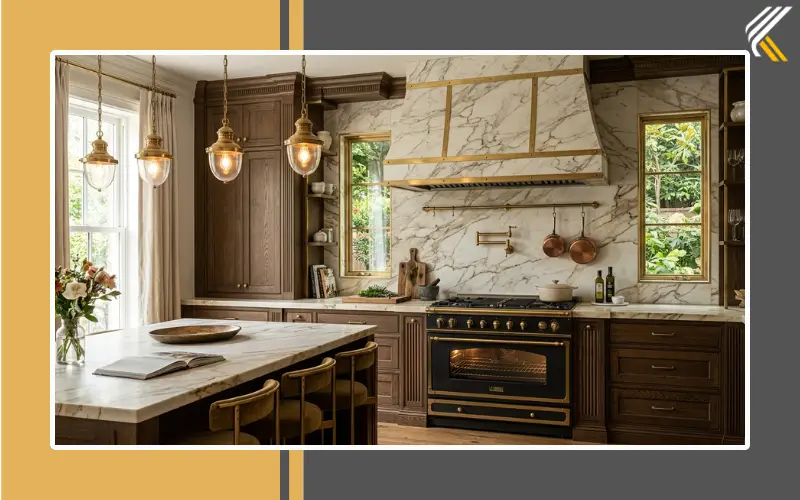
The backsplash extends from the countertop to the underside of the hood, creating a clean and balanced appearance.
Option 2: To the Ceiling
Many luxury kitchens extend the backsplash all the way to the ceiling behind the cooking area.
This creates a dramatic focal point while maximizing wall protection.
Option 3: Decorative Feature Wall
Some homeowners choose a decorative tile design or slab backsplash behind the range while keeping the rest of the backsplash at a standard height.
This allows them to create visual impact without dramatically increasing costs.
What We Often See During Remodels
In our experience, the backsplash area behind the stove is the feature that guests notice most often.
We have seen many homeowners upgrade only this section with a taller backsplash or decorative tile design while keeping the rest of the kitchen more budget-friendly.
This strategy often creates a high-end appearance without significantly increasing remodeling costs.
Pro Tip
Before choosing a backsplash height, stand back and view your kitchen as a whole. The most successful kitchens are not designed around the backsplash alone. They balance cabinet placement, countertop depth, range hood design, lighting, and wall proportions to create a cohesive look.
Should Your Height Affect Backsplash Height?
One unique factor that many homeowners overlook is personal comfort.
Your height can influence cabinet placement, which directly affects backsplash height.
A taller homeowner may prefer cabinets positioned slightly higher to create more workspace between the countertop and cabinets.
This naturally creates a taller backsplash area.
Shorter homeowners may prefer cabinets that are easier to reach, reducing the available backsplash space.
When planning a kitchen remodel, consider:
-
- Daily comfort
-
- Reach distance
-
- Accessibility
-
- Future aging-in-place needs
-
- Storage requirements
The best kitchen backsplash height should support both functionality and aesthetics.
Why Some Homeowners Choose a Taller Backsplash
Many homeowners are moving away from short backsplashes and choosing taller installations.
There are several reasons for this trend.
Better Wall Protection
A larger backsplash protects more wall area from moisture, grease, and cooking splatter.
Easier Cleaning
Less painted wall surface means fewer areas that require regular cleaning.
More Design Flexibility
Taller backsplashes allow for larger tile layouts, decorative patterns, and statement materials.
Improved Visual Flow
A taller backsplash helps create a seamless connection between the countertop and upper cabinetry.
Modern Appearance
Many homeowners prefer taller backsplashes because they make kitchens feel more custom and luxurious.
This trend has become especially popular in contemporary kitchen design.
How Countertop Depth Affects Backsplash Height
Countertop depth can influence how a backsplash looks and functions.
Most standard countertops are approximately 25 inches deep.
However, custom kitchens often include deeper countertops that provide additional workspace.
When countertops become deeper, many homeowners choose:
-
- Larger tile formats
-
- Taller backsplashes
-
- Full-height backsplash designs
This helps maintain visual balance.
A deep countertop paired with a very short backsplash can sometimes feel out of proportion.
For the best results, countertop depth and backsplash height should be planned together rather than separately.
How Upper Cabinet Height Influences Backsplash Design
Upper cabinets play a major role in determining backsplash height.
Common cabinet heights include:
-
- 30-inch cabinets
-
- 36-inch cabinets
-
- 42-inch cabinets
Taller cabinets often reduce the visible backsplash area.
Shorter cabinets create more space for decorative backsplash designs.
When planning your backsplash, consider:
-
- Cabinet height
-
- Cabinet depth
-
- Ceiling height
-
- Countertop dimensions
-
- Appliance placement
A backsplash should work with the entire kitchen layout rather than serving as an isolated design feature.
Backsplash Height for Kitchens Without Upper Cabinets
Open shelving and cabinet-free walls have become increasingly popular.
Without upper cabinets acting as a stopping point, homeowners gain much more flexibility.
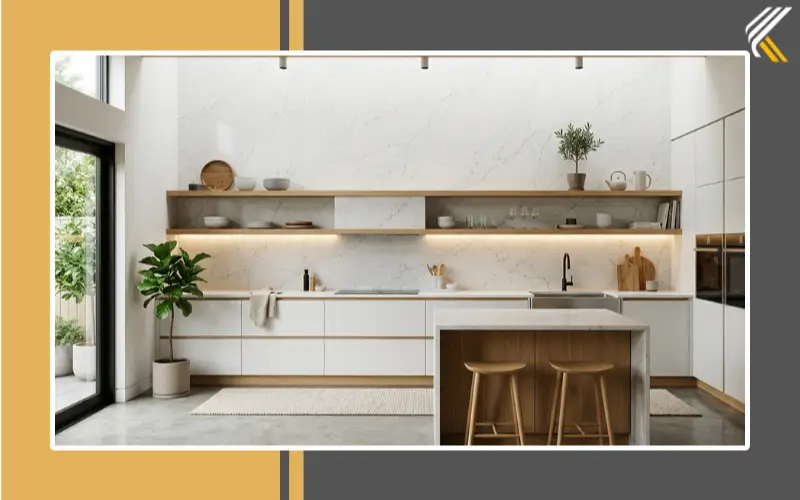
Half-Wall Backsplash
A half-wall backsplash typically extends 18 to 24 inches above the countertop.
This option provides wall protection while keeping costs manageable.
Full-Wall Backsplash
A full-wall backsplash extends from the countertop to the ceiling.
This design creates a dramatic appearance and is especially popular with quartz slabs, marble, and large-format tile.
Accent Area Backsplash
Some homeowners install full-height backsplashes only in key areas, such as:
-
- Behind the range
-
- Around the sink
-
- Coffee stations
-
- Beverage centers
This creates a focal point while helping control remodeling costs.
In many kitchens without upper cabinets, a full-height backsplash creates the most balanced and visually appealing result.
Best Kitchen Backsplash Height for Different Kitchen Layouts
The ideal backsplash height often depends on your kitchen layout.
Small Kitchens
Full-height backsplashes can make smaller kitchens feel larger because they create a continuous visual surface.
Real-World Observation
During remodeling consultations, we frequently find that smaller kitchens benefit the most from full-height backsplashes. The uninterrupted surface reduces visual breaks and helps compact spaces feel more open and spacious.
Best Kitchen Backsplash Height for Different Kitchen Layouts
The ideal backsplash height often depends on your kitchen layout.
Open-Concept Kitchens
Open-concept kitchens benefit from taller backsplashes because they help define the kitchen zone while creating a polished and cohesive appearance.
Since these kitchens are visible from multiple areas of the home, a full-height backsplash often provides a cleaner and more finished look.
Galley Kitchens
Galley kitchens usually have limited wall space and heavy daily use.
Extending the backsplash to the bottom of the upper cabinets helps maximize wall protection while maintaining a balanced appearance.
Large-format tile can also help reduce visual clutter in narrow kitchens.
Luxury Kitchens
Luxury kitchens often feature:
-
- Full-height quartz backsplashes
-
- Marble slab backsplashes
-
- Porcelain slab installations
-
- Ceiling-height feature walls
These materials create a custom appearance that complements premium cabinetry and high-end appliances.
Backsplash Height by Kitchen Style
Different kitchen styles often work best with different backsplash heights.
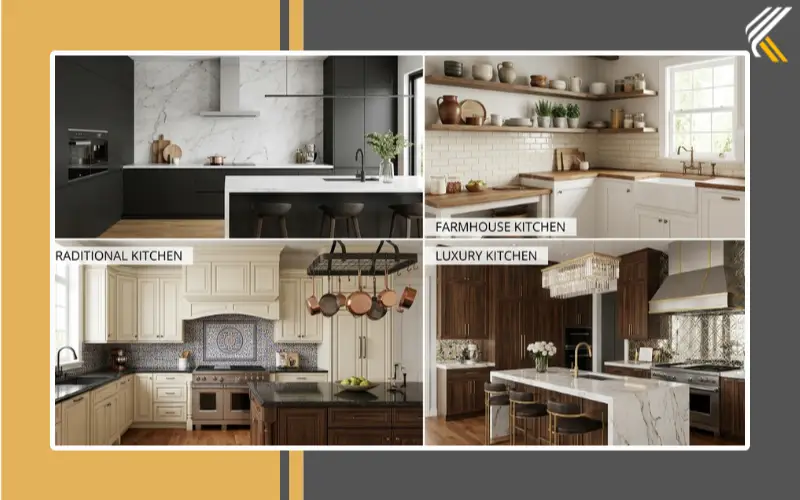
Modern Kitchens
Modern kitchens commonly feature:
-
- Full-height backsplashes
-
- Large-format tile
-
- Quartz slabs
-
- Minimal grout lines
The goal is a seamless and uncluttered appearance.
Traditional Kitchens
Traditional kitchens often use:
-
- Standard-height backsplashes
-
- Subway tile
-
- Decorative trim pieces
-
- Neutral color palettes
This approach creates a timeless look that remains attractive for years.
Farmhouse Kitchens
Farmhouse kitchens frequently include:
-
- Tile extending to upper cabinets
-
- Patterned backsplash accents
-
- Warm finishes
-
- Decorative details
These elements add charm and character.
Luxury Kitchens
Luxury kitchens often incorporate:
-
- Marble slabs
-
- Bookmatched stone
-
- Quartz feature walls
-
- Ceiling-height installations
These features help create a custom-designed appearance.
Backsplash Height by Material
The material you choose can influence the ideal backsplash height.
Tile Backsplash
Tile remains one of the most versatile backsplash materials.
Popular options include:
-
- Subway tile
-
- Ceramic tile
-
- Porcelain tile
-
- Mosaic tile
Tile works well for both standard and full-height backsplashes. If you’re planning a DIY project, our step-by-step guide on installing tile on a kitchen wall can help you understand the tools, preparation, and installation process.
Quartz Backsplash
Quartz is becoming increasingly popular because it creates a seamless appearance with no visible grout lines.
Many homeowners extend quartz backsplashes to the ceiling for a clean and modern look.
Marble Backsplash
Marble creates a dramatic focal point and is often used behind ranges and statement walls.
Granite Backsplash
Granite can be installed as:
-
- A 4-inch backsplash
-
- A standard-height backsplash
-
- A full-height backsplash
The best option depends on the overall kitchen design. Before selecting a material, it’s worth reviewing the different backsplash design choices available for modern kitchens to understand how each option affects maintenance, cost, and appearance.
Quartz vs Tile Backsplash: Which Works Best for Different Heights?
Quartz and tile are two of the most popular backsplash materials available today.
| Feature | Quartz Backsplash | Tile Backsplash |
|---|---|---|
| Appearance | Seamless | Design Variety |
| Grout Lines | None | Visible |
| Cleaning | Easier | Moderate |
| Full-Height Applications | Excellent | Excellent |
| Cost | Higher | Lower |
Quartz is often preferred for full-height installations because it creates a smooth and uninterrupted surface.
Tile remains popular because it offers more design flexibility and a wider range of price points.
How Ceiling Height Affects Backsplash Height
Ceiling height should be considered when planning a backsplash.
8-Foot Ceilings
Most standard backsplash heights work well with 8-foot ceilings.
The proportions generally feel balanced.
9-Foot Ceilings
A taller backsplash can help fill vertical space and prevent the kitchen from feeling disconnected.
Vaulted Ceilings
Full-height backsplashes often create a dramatic effect in kitchens with vaulted ceilings.
Large-format materials can help emphasize architectural features.
Common Kitchen Backsplash Height Mistakes
Even beautiful materials can look out of place if backsplash height is poorly planned.
Avoid these common mistakes.
Stopping Tile at an Awkward Point
A backsplash should end naturally at cabinets, shelves, or architectural features.
Random stopping points often make the kitchen look unfinished.
Ignoring Range Hood Alignment
The backsplash should complement the range hood rather than compete with it.
Choosing Height Based Only on Trends
Design trends change.
Function and long-term usability should always come first.
Using Different Heights on Connected Walls
Inconsistent backsplash heights can make a kitchen feel disjointed.
Forgetting Outlet Placement
Electrical outlets should be considered before installation begins. Proper planning during the installation phase can help avoid alignment problems, uneven grout lines, and other common issues that occur during a backsplash installation project.
Ignoring Future Maintenance
Some materials and grout lines require more upkeep than others.
Choose a solution that fits your lifestyle.
Does a Full-Height Backsplash Increase Home Value?
A full-height backsplash can improve buyer perception and make a kitchen feel more custom and luxurious.
Potential buyers often associate full-height backsplashes with:
-
- Higher-end kitchens
-
- Better craftsmanship
-
- Modern design
-
- Premium materials
While a backsplash alone will not guarantee a specific increase in resale value, it can contribute to a stronger overall impression during home showings.
According to the Remodeling Magazine Cost vs. Value Report, kitchen improvements continue to be among the most closely evaluated upgrades by homeowners considering resale value.
Kitchen Updates Buyers Notice First
When preparing a home for sale, some upgrades attract more attention than others.
Many buyers immediately notice:
-
- Countertops
-
- Cabinet finishes
-
- Lighting
-
- Backsplash design
-
- Appliances
A well-designed backsplash can help a kitchen feel newer and more updated.
While it may not determine the selling price on its own, it often contributes to a positive first impression.
Is a Full-Height Backsplash Worth the Extra Cost?
For many homeowners, the answer is yes.
A full-height backsplash requires more material and labor than a standard backsplash, but it also delivers greater visual impact.
The extra investment may be worthwhile if you want:
-
- Better wall protection
-
- Easier maintenance
-
- A more modern appearance
-
- A stronger focal point behind the range
-
- A custom kitchen look
For budget-conscious remodels, a standard backsplash may still provide excellent value.
The best choice depends on your renovation goals and budget.
Standard vs Full-Height Backsplash: Quick Comparison
| Factor | Standard Height | Full Height |
|---|---|---|
| Cost | Lower | Higher |
| Cleaning | Good | Excellent |
| Wall Protection | Good | Excellent |
| Visual Impact | Moderate | High |
| Luxury Appeal | Moderate | High |
| Popularity in 2026 | Medium | Very High |
Kitchen Backsplash Height Trends for 2026
Kitchen design trends continue to evolve.
Several backsplash styles are becoming increasingly popular.
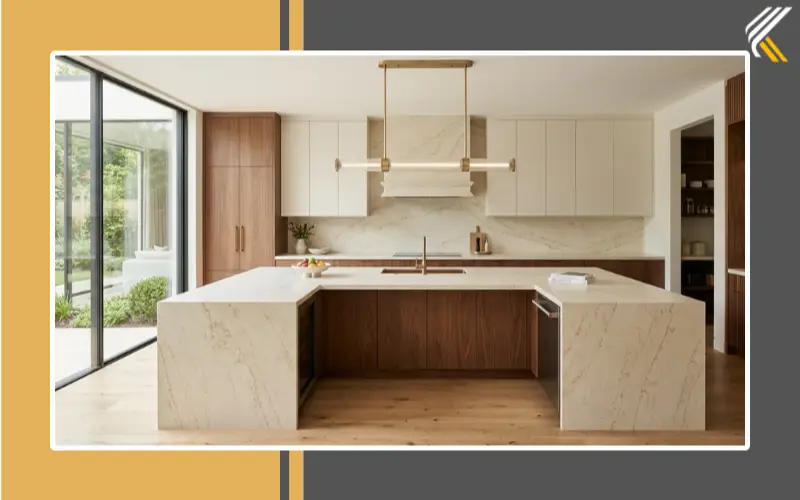
Full-Height Stone Slabs
Quartz and marble slabs remain highly desirable in modern kitchens.
Large-Format Tile
Large tiles reduce grout lines and create a cleaner appearance.
Continuous Veining
Many homeowners choose stone surfaces where the countertop pattern flows directly into the backsplash.
Statement Stove Walls
Feature walls behind ranges continue to gain popularity.
Warm Neutral Colors
Soft white, cream, beige, taupe, and warm gray shades remain leading choices in kitchen design.
Many of these trends are part of larger kitchen wall design ideas that homeowners are using today to create more customized and functional spaces.
What Kitchen Designers Recommend
Many kitchen designers recommend selecting backsplash height based on the overall kitchen design rather than following a fixed rule.
For traditional kitchens, extending the backsplash to the bottom of the upper cabinets is often enough.
For contemporary kitchens, designers frequently recommend a full-height backsplash, especially behind the range.
A well-planned backsplash should connect visually with the cabinets, countertops, and range hood.
What We Continue to Notice
One trend we have consistently seen over the past few years is the shift away from short backsplashes.
Many homeowners who initially plan a 4-inch backsplash ultimately choose a taller installation after reviewing design mockups because the kitchen feels more modern and complete.
What Is the Best Kitchen Backsplash Height for Your Home?
The ideal backsplash height depends on your kitchen style, budget, and layout.
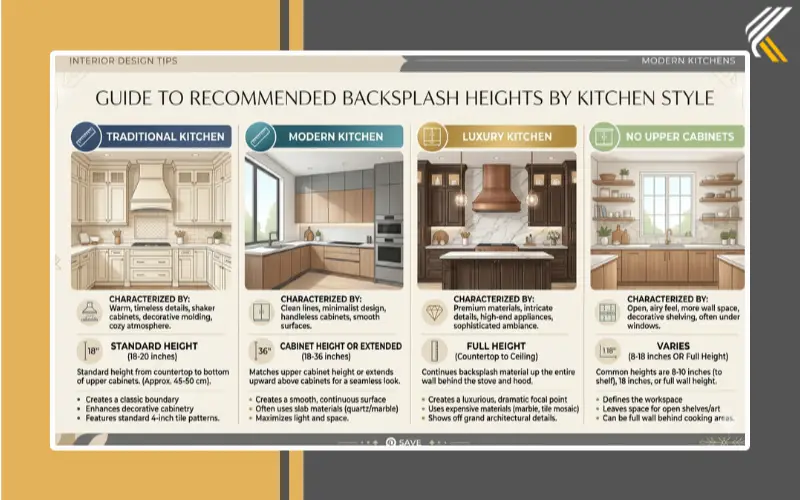
| Situation | Recommended Backsplash Height |
|---|---|
| Traditional Kitchen | 4–18 Inches |
| Modern Kitchen | Full Height |
| Kitchen With Upper Cabinets | To Bottom of Cabinets |
| Kitchen Without Upper Cabinets | Full Height or Ceiling Height |
| Luxury Remodel | Full-Height Stone or Slab |
| Budget Remodel | Standard Height |
| Behind a Stove | To Range Hood or Ceiling |
Use this table as a starting point when deciding which backsplash height is right for your project.
Our Experience With Kitchen Backsplash Height
During kitchen remodeling projects, one common mistake homeowners make is focusing only on tile style while overlooking backsplash height.
In many cases, extending the backsplash to the underside of upper cabinets creates a cleaner and more finished appearance without adding a significant amount to the overall project cost.
We have also found that full-height backsplashes tend to have the greatest visual impact in kitchens without upper cabinets or in spaces with decorative range hoods.
When homeowners compare a standard backsplash to a full-height installation side by side, the taller option often creates a more custom and luxurious appearance.
Quick Checklist for Choosing the Right Backsplash Height
Before making a final decision, ask yourself:
✓ Do I have upper cabinets?
✓ How much cooking do I do?
✓ Do I want a traditional or modern kitchen?
✓ Is resale value important?
✓ What is my remodeling budget?
✓ Will I use tile, quartz, marble, or granite?
✓ Do I want a statement wall behind the range?
Answering these questions can help you choose a backsplash height that fits both your design goals and practical needs.
A Practical Lesson From Real Kitchen Remodels
One lesson we have learned from kitchen remodeling projects is that backsplash height is often easier to change on paper than after installation.
Homeowners who spend extra time reviewing cabinet placement, countertop depth, backsplash design, and appliance locations together are usually happier with the final result.
Taking a few extra days during the planning stage can help avoid costly changes later.
Frequently Asked Questions
What is the standard kitchen backsplash height?
There is no official standard height. In most kitchens, the backsplash extends from the countertop to the bottom of the upper cabinets, which is typically about 18 inches.
Is a 4-inch backsplash outdated?
Not necessarily. A 4-inch backsplash still works well in some traditional kitchens. However, many homeowners now prefer taller backsplashes for a more updated appearance.
Should a backsplash go all the way to the ceiling?
It can. Ceiling-height backsplashes are especially popular in modern and luxury kitchens.
How high should a backsplash be behind a stove?
Most designers recommend extending the backsplash to the bottom of the range hood or all the way to the ceiling.
Does a full-height backsplash cost more?
Yes. It requires more material and labor than a standard backsplash.
What backsplash height looks most modern?
A full-height backsplash made from quartz, marble, porcelain slabs, or large-format tile typically creates the most modern appearance.
What is the standard distance between the countertop and upper cabinets?
The standard distance is approximately 18 inches.
Can a backsplash be too high?
A backsplash can feel too high if it disrupts the balance of the kitchen design. The best height should work with your cabinets, countertops, and ceiling height.
Should a backsplash end at cabinets or the ceiling?
In kitchens with upper cabinets, backsplashes often end at the bottom of the cabinets. In kitchens without upper cabinets, many homeowners extend the backsplash to the ceiling.
What is the most popular backsplash height in 2026?
Full-height backsplashes remain one of the most popular kitchen design trends in 2026.
Is a 4-inch backsplash still in style?
While less common in modern kitchens, a 4-inch backsplash is still used in many traditional and budget-friendly remodels.
Who Should Choose Each Option?
Choose a Standard Backsplash If:
- You prefer a traditional kitchen style.
- You have a tighter remodeling budget.
- Your kitchen already has upper cabinets.
- You want a timeless design.
Choose a Full-Height Backsplash If:
- You want a modern appearance.
- You are remodeling your entire kitchen.
- You have open shelving or no upper cabinets.
- You want maximum wall protection.
- You want a custom, high-end look.
Final Thoughts
Choosing the right kitchen backsplash height can dramatically improve both the appearance and functionality of your kitchen. While many kitchens use an 18-inch backsplash that extends to the bottom of the upper cabinets, there is no universal rule. The ideal height depends on your cabinet layout, countertop depth, kitchen style, budget, and personal preferences.
For traditional kitchens, a standard-height backsplash often provides a timeless and practical solution. For modern remodels, a full-height backsplash can create a striking focal point while offering maximum wall protection. The most successful kitchen designs consider the entire space, including cabinetry, countertops, appliances, lighting, and backsplash design.
As you plan your renovation, explore Kitchenoro’s Kitchen Backsplash guide for more inspiration, material comparisons, and expert design advice to help create a kitchen you’ll love for years to come.
About Kitchenoro
Kitchenoro is your trusted partner for complete kitchen remodeling, renovation, and elegant design. We specialize in premium cabinet installation, countertops, and transforming kitchens into luxurious, functional spaces. With expert craftsmanship and tailored solutions, Kitchenoro turns your vision into reality. Contact us to elevate your kitchen’s style and functionality!