
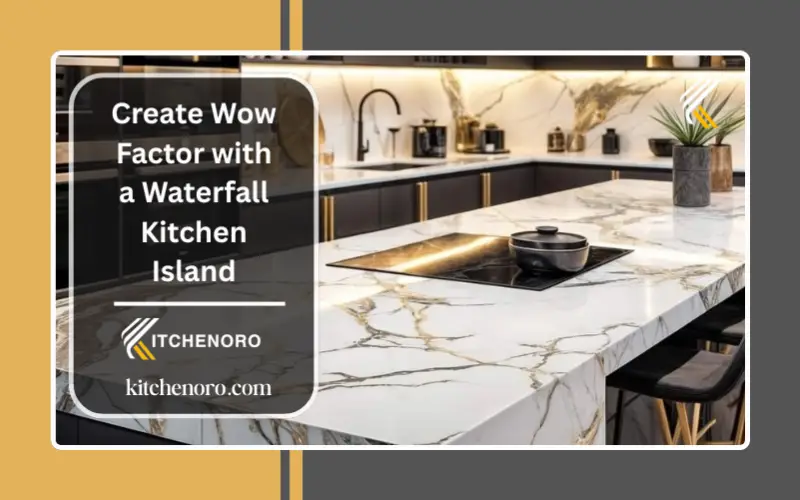
A waterfall kitchen island is one of the most striking design features you can add to a modern kitchen. By extending the countertop material vertically down to the floor, this design creates a seamless, sculptural look that transforms the island into a true centerpiece.
Whether crafted from quartz, marble, granite, or concrete, a waterfall island delivers high-end visual impact while enhancing functionality. However, it also comes with higher costs and specific design challenges that homeowners should understand before committing.
Create Wow Factor with a Waterfall Kitchen Island- Quick Answer:
A waterfall kitchen island adds elegance and modern style by extending the countertop material seamlessly down to the floor. While it’s costly and complex to install, it enhances both aesthetics and functionality, offering extra storage and a luxurious touch. However, maintenance can be tricky, and cleaning without a lip can be challenging. Despite these factors, when done right, it’s a stunning addition to any kitchen.
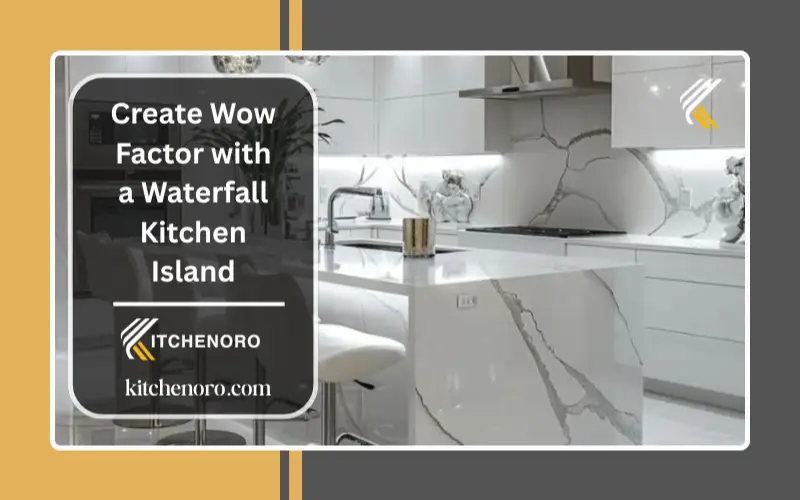
Continuous stone veining enhances the dramatic waterfall edge effect.
What Is a Waterfall Kitchen Island?
A waterfall kitchen island is an island design where the countertop material continues down one or both sides of the island, reaching the floor in a smooth, continuous flow. This creates a sleek vertical “waterfall” effect that elevates the kitchen’s appearance and emphasizes clean, modern lines.
If you’re planning a full remodel, exploring different approaches to modern kitchen aesthetics and functional layouts can help you decide whether a waterfall island fits your overall kitchen style vision.
Waterfall Island vs Standard Kitchen Island
| Feature | Waterfall Island | Standard Island |
|---|---|---|
| Visual Impact | Luxury statement piece | Functional and traditional |
| Cost | Higher (extra stone + labor) | Lower |
| Cleaning | Harder (no lip edge) | Easier |
| Seating Flexibility | Limited | More flexible |
| Best For | Design-forward kitchens | Budget-friendly remodels |
Material Options for Waterfall Countertops
Waterfall countertops are available in many materials, each offering a distinct look and level of durability:
- Quartz: Durable, stain-resistant, and consistent veining
- Marble: Elegant and timeless, but requires sealing
- Granite: Natural beauty with strong durability
- Concrete: Industrial style with customizable finishes
- Butcher block: Warm and budget-friendly
- Stainless steel: Ultra-modern and hygienic
Pairing premium countertops with timeless cabinet styles can help balance modern luxury with long-term value and practicality during a renovation.
Cost of a Waterfall Kitchen Island
A waterfall island typically costs more than a standard island due to the additional slab material and complex installation.
Average cost ranges:
- $40–$100 per sq ft for materials
- Installation can add up to $100 per sq ft
- Total project cost: $3,000 to $8,000+
Higher-end stones and bookmatched slabs can increase pricing significantly.
Ideal Size & Thickness Recommendations
For best visual balance and structural stability:
- Minimum island width: 36 inches
- Recommended length: 6–8 feet
- Stone thickness:
– Standard: 2 cm (¾”)
– Premium look: 3 cm (1¼”)
- Overhang for seating: 12 inches (maximum 15 inches)
Undersized slabs can make the waterfall effect appear bulky or awkward.
Design Appeal & Visual Impact
A waterfall island transforms an ordinary kitchen into a luxury focal point. The continuous stone flow creates a bold architectural statement that draws attention from every angle. Heavily veined materials, such as marble or quartzite, work especially well because they showcase natural patterns across vertical and horizontal planes.
Many homeowners choose dramatic island features to create a luxurious centerpiece that instantly elevates open-concept kitchens.
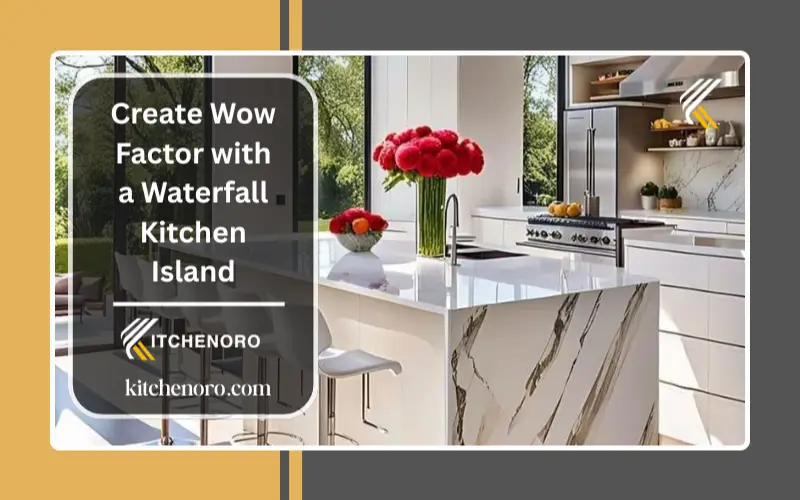
Quartz waterfall islands offer durability and elegant contemporary appeal.
Structural & Installation Challenges
Achieving a flawless waterfall edge requires expert craftsmanship. Installers must:
- Source matching slabs for continuous veining
- Use mitred joints instead of stacked edges
- Reinforce cabinetry to support heavy stone
- Cut edges precisely to avoid chipping
- Seal seams carefully for long-term durability
This complexity contributes to higher labor costs.
Who Should NOT Choose a Waterfall Island
A waterfall island may not be ideal if you:
- Prefer easy cleaning
- Have a limited renovation budget
- Need seating on all sides
- Have small children or large pets
- Prefer farmhouse or rustic kitchens
- Have cabinets that cannot support heavy stone
This feature is best suited for modern, open kitchens where visual impact is the priority. For softer and more traditional interiors, curved architectural details and decorative kitchen entry transitions may complement the space better than sharp waterfall edges.
Layout Warnings (Design Mistakes to Avoid)
Avoid installing a waterfall island if:
- Your kitchen is under 120 sq ft
- Traffic flow is already tight
- You rely on sweeping crumbs into a dustpan
- Your island is the primary seating area
- You plan to use thin or mismatched slabs
Poor placement can make kitchens feel cramped and impractical. Before installing a large island, it’s important to evaluate spacing, workflow, and traffic clearance to ensure the kitchen remains functional and comfortable.
Maintenance & Care
Different materials require different care levels:
- Marble: Requires regular sealing
- Wood: Needs protective coatings
- Quartz: Easy maintenance
- Concrete: Needs sealing to prevent stains
The vertical panel is especially vulnerable to dings and scratches, so protective pads and rounded lower edges are recommended.
Hidden Issues with Waterfall Countertops
1. No Lip = Cleaning Difficulty
Without a counter lip, crumbs and spills fall directly to the floor, often collecting where the vertical panel meets the ground.
2. Edge Damage Risk
The vertical slab is exposed to impacts from chairs, toys, and feet.
3. Visual Imperfections
Natural stone variations can appear darker or stained along outer corners over time.
Popular Types of Waterfall Countertops
Asymmetrical Waterfall Island
Only one side cascades down, creating a floating illusion and saving cost.
Quartz Waterfall Island
Durable, modern, and compatible with most kitchen styles.
Waterfall Island with Storage
Combines beauty with functional cabinetry and shelving.
Heavily Veined Stone
Showcases dramatic patterns for bold visual impact.
Concrete Waterfall Countertop
Industrial, durable, and customizable.
Granite Waterfall Countertop
Classic luxury with strong durability and depth.
Is a Waterfall Kitchen Island Worth It?
A waterfall island is worth it for homeowners who prioritize design and are willing to invest in premium materials and professional installation. While it increases cost and maintenance, it significantly boosts visual appeal and resale value in modern homes.
FAQs
1- What is a waterfall kitchen island?
A waterfall kitchen island is a design feature where the countertop material extends down the sides of the island, creating a seamless vertical effect that reaches the floor. It adds a modern, sophisticated look to the kitchen, making it a standout focal point.
2- Is waterfall Island still in style?
A waterfall kitchen island adds a sleek, modern, and sophisticated touch to kitchens. Its continuous design creates a minimalist look that blends beautifully with contemporary kitchen designs. This popular style offers a luxury feel and is a timeless addition for homeowners seeking both aesthetic appeal and functionality.
3- How much do waterfall islands cost?
A waterfall countertop can cost between $40 and $100 per square foot, with some options going beyond that. The price depends on the stone slabs or quartz used as materials. Installation can add extra costs, sometimes reaching $100 per square foot. This is generally more expensive than a conventional countertop due to the complex installation process.
4- What are the disadvantages of waterfall countertops?
Waterfall countertops may be aesthetically pleasing, but they come with disadvantages like higher cost, complex installation, and potential for damage. These countertops might not fit all kitchen styles, and the extended islands can limit seating options.
Conclusion
A waterfall kitchen island blends luxury, functionality, and modern design into one striking feature. While it requires a higher investment and careful planning, the final result can dramatically elevate your kitchen’s look and value.
When executed correctly with proper materials, sizing, and professional installation, a waterfall island becomes both a visual masterpiece and a functional centerpiece. Combining statement countertops with smart layout planning and cohesive cabinet selections creates a kitchen that feels both luxurious and highly functional.
Thinking About Installing a Waterfall Island?
Kitchenoro specializes in custom countertop fabrication and waterfall island installation.
Our experts help you choose the right stone, layout, and structure for flawless results.
Request a free consultation today and transform your kitchen with confidence.
About Kitchenoro
Kitchenoro is your trusted partner for complete kitchen remodeling, renovation, and elegant design. We specialize in premium cabinet installation, countertops, and transforming kitchens into luxurious, functional spaces. With expert craftsmanship and tailored solutions, Kitchenoro turns your vision into reality. Contact us to elevate your kitchen’s style and functionality!