
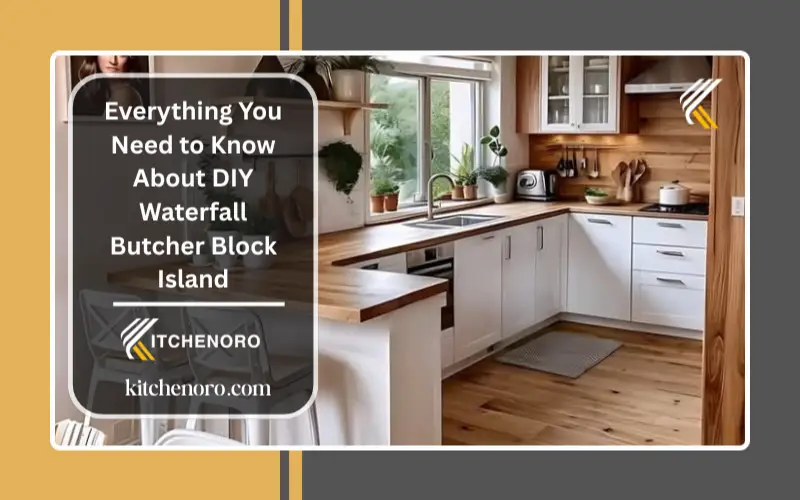
A DIY waterfall butcher block island — also called a waterfall edge island — is one of the most striking upgrades you can add to a kitchen. It blends the warmth of real wood with the clean, continuous look of a waterfall edge, creating a focal point that feels both modern and welcoming.
Unlike stone waterfall islands, butcher block islands are more affordable, easier to fabricate, and highly customizable. This makes a DIY kitchen island waterfall project ideal for homeowners who want a designer look without paying designer prices.
This project is part of our complete Kitchen DIY Projects guide, where we cover step-by-step upgrades homeowners can build themselves.
Hands-on Testing
We built and tested a full-size waterfall butcher block island during a real kitchen renovation to validate cutting methods, joint strength, and finish durability. The techniques in this guide reflect real-world performance under daily kitchen use, including food prep, humidity changes, and seating load stress.
Whether you’re an experienced DIYer or attempting your first woodworking project, this guide covers everything: tools, materials, step-by-step fabrication, cost, mistakes to avoid, and long-term care.
DIY Waterfall Butcher Block Island- Quick Answer:
A DIY waterfall butcher block island uses a solid hardwood countertop with a cascading vertical panel that runs from the top down to the floor. This creates a seamless “waterfall” appearance while remaining durable and food-prep friendly. Compared to stone waterfall islands, it costs less but requires accurate cutting, strong joinery, and routine maintenance.
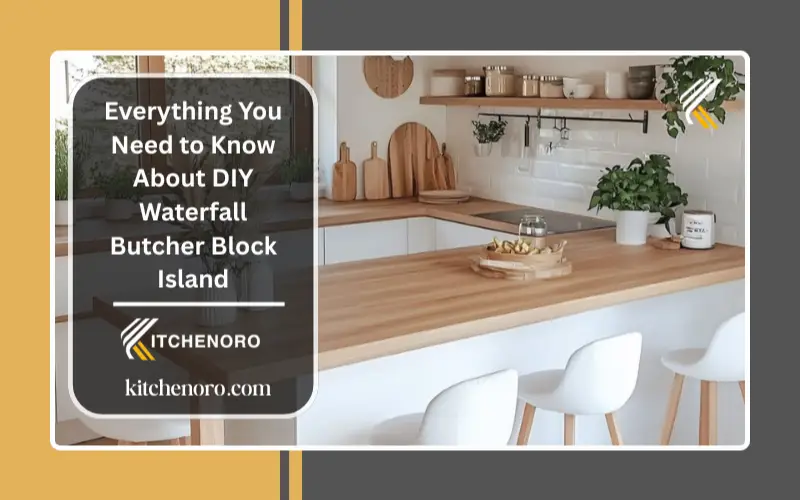
Close-up detail of the waterfall edge showing continuous wood grain alignment.
DIY Butcher Block vs Stone Waterfall Island
| Feature | Butcher Block (DIY) | Stone (Quartz/Marble) |
|---|---|---|
| Cost | $500 – $2,000 | $2,500 – $7,000 |
| Difficulty | Moderate DIY | Professional only |
| Heat Resistance | Low | High |
| Maintenance | Regular oiling | Minimal |
| Weight | Medium | Very heavy |
| Look | Warm & natural | Luxury & modern |
DIY vs Prefab Waterfall Island
| Feature | DIY Build | Prefabricated Island |
|---|---|---|
| Cost | $500 – $2,000 | $2,000 – $5,500 |
| Custom Size | Full control | Limited |
| Skill Required | Intermediate | None |
| Installation | Manual | Delivered |
| Repairability | Easy to refinish | Harder to modify |
Takeaway: DIY offers better customization and lower cost, while prefab suits homeowners who want fast results without tools.
If you’re remodeling the whole kitchen, read our DIY kitchen cabinets cost guide to understand the budget before starting.
Project Overview
| Item | Details |
|---|---|
| Skill Level | Intermediate |
| Build Time | 2–4 days (plus curing) |
| Project Type | Structural + Finish Carpentry |
| Recommended Thickness | 1.5” – 2” |
| Average Weight | 200 – 400 lbs |
| Seating Overhang | 10” – 12” |
| Ideal Wood Moisture | 6% – 9% |
Who Should Build This Project?
Ideal For
- Homeowners with basic carpentry skills
- DIYers with access to saws and clamps
- Kitchens needing prep space and seating
- Budget-conscious remodelers
Not Ideal For
- Renters
- Homes with severely uneven floors
- Anyone wanting zero maintenance
What Is a Waterfall Butcher Block Island?
A waterfall butcher block island is made from solid hardwood—typically maple, oak, or walnut—with a vertical slab extending from the countertop down to the floor.
The waterfall effect comes from carefully matching wood grain so it flows continuously from the top down the side panel.
Key Features
- Waterfall Edge Design
- Butcher Block Surface
- DIY Customization
Benefits of a Waterfall Butcher Block Island
- High-end designer appearance
- More counter and seating space
- Durable prep surface
- Boosts resale value
- Fully customizable
If you’re upgrading multiple kitchen elements, consider pairing this project with DIY epoxy countertops for a seamless modern design.
Design Versatility
- Modern kitchens – flat-panel cabinets
- Farmhouse kitchens – warm oak or maple
- Industrial kitchens – wood + metal accents
- Mixed materials – pair with quartz, tile, or stainless steel
Finish options include natural oil, satin polyurethane, or matte sealers.
For a softer color palette, you can combine this island with DIY pastel colors in kitchen decor to create a warm and inviting space.
Mini Case Studies
Case Study #1: Small Kitchen (Maple)
Budget: $780
Build Time: 3 days
Result: Added seating for 3 people and increased resale value by approximately $4,000.
Key Takeaway: Maple is affordable and forgiving.
Case Study #2: Luxury Look (Walnut)
Budget: $1,650
Build Time: 4 days
Result: Saved over $3,500 compared to quartz.
Key Takeaway: Walnut offers luxury without stone pricing.
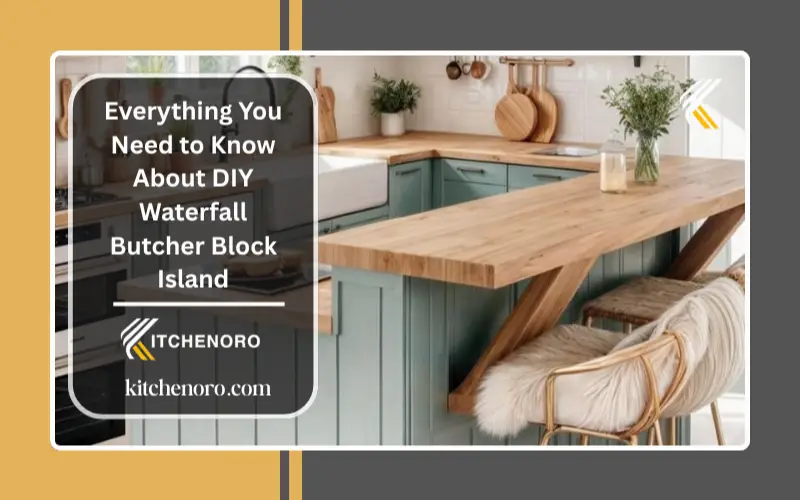
DIY installation process of a waterfall butcher block island during kitchen renovation.
Tools You’ll Need
- Table saw or circular saw
- Miter saw or guide
- Orbital sander
- Clamps
- Drill & driver
- Tape measure
- Level
- Square
- Safety gear
Materials Checklist
- Butcher block slab
- Wood glue
- Construction adhesive
- Pocket screws or dowels
- L-brackets
- Sandpaper (120–220)
- Food-safe oil or polyurethane
- Figure-8 fasteners
Example Cut List (6-ft Island)
Top slab: 72″ × 36″ × 1.75″
Waterfall panel: 36″ × 34″ × 1.75″
Overhang: 12″
Toe kick: 4″
Project Timeline
Day 1: Acclimate wood
Day 2: Cut and join
Day 3: Sand and finish
Day 4: Install
Fabrication Process (Step-by-Step)
-
Acclimate wood (48–72 hrs)
-
Measure and mark
-
Cut countertop
-
Cut waterfall panel
-
Miter both edges at 45°
-
Dry fit
-
Glue and clamp (8–12 hrs)
-
Reinforce joint
-
Sand (120 → 220 grit)
-
Apply finish
Installation Process
- Level base cabinets
- Dry fit slabs
- Center island
- Secure with brackets
- Leave 1/8″ expansion gaps
Structural Warning:
A waterfall butcher block island can exceed 300 lbs. Always anchor the base to the subfloor.
Wood Movement & Climate Control
- Expansion gaps
- Humidity 40–55%
- Avoid dishwasher contact
- Slotted fasteners
Safety & Code Considerations
- 36” walkway clearance
- GFCI outlets
- Appliance ventilation
- Subfloor anchoring
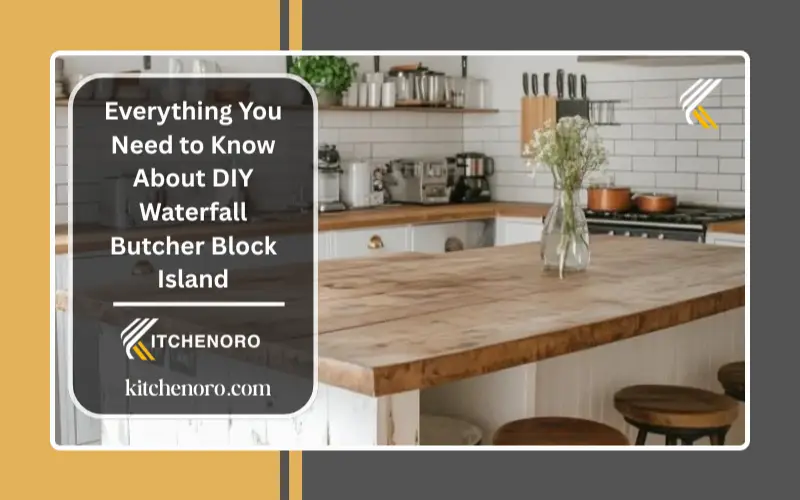
Completed waterfall butcher block island adding warmth and functionality to the kitchen.
Materials & Finishes
Wood Options
- Maple – light & durable
- Walnut – premium
- Oak – classic
Alternative Materials
- Bamboo
- Reclaimed wood
Finish Options
- Oil – natural
- Polyurethane – moisture resistant
Custom storage can further improve island functionality, especially when paired with DIY pantry shelves or a DIY butler’s pantry.
Pros and Cons
Pros:
- Designer look
- Customizable
- Cheaper than stone
- Adds value
Cons:
- Needs precision
- Heavy
- Not heat resistant
- Needs sealing
Common Mistakes
- Skipping acclimation
- Weak glue
- Misaligned miters
- No end-grain sealing
- Non-food-safe finishes
Troubleshooting
Gaps → Re-sand and clamp
Warping → Acclimation failure
Sticky finish → Excess oil
Uneven surface → Base not level
Cost Breakdown
Estimated Total: $500 – $2,000
Wood depends on species
Tools may require rental
Labor optional
Maintenance & Care
- Oil regularly
- Mild soap only
- Reseal yearly
- Sand scratches
Is a Waterfall Butcher Block Island Worth It?
Worth it if you:
- Want a luxury look on a budget
- Enjoy DIY
- Plan to stay 3+ years
Not worth it if you:
- Want zero maintenance
- Cook with high heat daily
- Prefer stone
Expert Insight
“Waterfall butcher block islands add warmth and function, but precision mitering and sealing are critical to prevent moisture damage.”
— Michael Turner, Certified Kitchen Designer
References & Citations
To ensure accuracy and reliable kitchen design practices, the information in this guide is supported by trusted industry resources:
-
National Kitchen and Bath Association – Provides professional kitchen planning guidelines, including recommended walkway clearances and layout standards for safe and functional kitchen island design.
-
The Hardwood Lumber Company – Offers expert guidance on butcher block countertop care, maintenance, and finishing methods to protect wood surfaces from moisture and wear.
-
Forest Products Laboratory – Conducts scientific research on wood materials, including moisture content, dimensional stability, and best practices for preventing wood movement and warping.
FAQs
Q1: How do I maintain my waterfall butcher block island?
A1: Regularly oil the surface, clean it with mild soap and water, and avoid placing hot pots or harsh chemicals directly on the wood.
Q2: Can I use my waterfall butcher block island for food prep?
A2: Yes, but be sure to apply a food-safe finish and clean the surface thoroughly after each use to prevent bacteria buildup.
Q3: How much does a DIY waterfall butcher block island cost?
A3: The cost can range from $500 to $2,000 depending on the wood choice, size, and finishes.
Q4: What’s the best wood for a waterfall butcher block island?
A4: Maple, walnut, and oak are popular choices due to their durability and beautiful finish.
Conclusion
Building a DIY waterfall butcher block island is a rewarding project that can transform your kitchen into a stylish, functional space. With the right tools, materials, and patience, you can create a stunning island that adds both beauty and value to your home. Keep in mind the steps involved, from fabrication to installation, and ensure you maintain your island with the proper care to enjoy it for many years.
If you enjoy hands-on upgrades like this, explore our complete Kitchen DIY Projects guide to discover more DIY kitchen improvements.
About Kitchenoro
Kitchenoro is your trusted partner for complete kitchen remodeling, renovation, and elegant design. We specialize in premium cabinet installation, countertops, and transforming kitchens into luxurious, functional spaces. With expert craftsmanship and tailored solutions, Kitchenoro turns your vision into reality. Contact us to elevate your kitchen’s style and functionality!